
Kendo Techniques & Waza Encyclopedia
Kendo techniques (waza) fall into two families. While shikake-waza emphasizes proactive attacks and creating openings, oji-waza focuses on responding to and capitalizing on the opponent's moves. Both require mental discipline, awareness of timing (sen), and understanding of distance (maai). Mastering both sets allows a practitioner to adapt fluidly to the flow of combat, shifting between attack and defense as needed.
Shikake-Waza vs Oji-Waza
Shikake-waza (仕掛け技) are proactive techniques where you take the initiative, disrupting your opponent's balance to create an opening. Oji-waza (応じ技) are counterattacks that respond to the opponent's attack with precision and timing—though good oji-waza also begins with seme that provokes the opponent to strike. Together they form the tactical heart of kendo beyond basic strikes.
- Shikake-waza: breaking balance and taking initiative
- Oji-waza: finding the moment when the opponent commits, then countering
- Both demand seme, sen (timing), maai (distance), and calm awareness
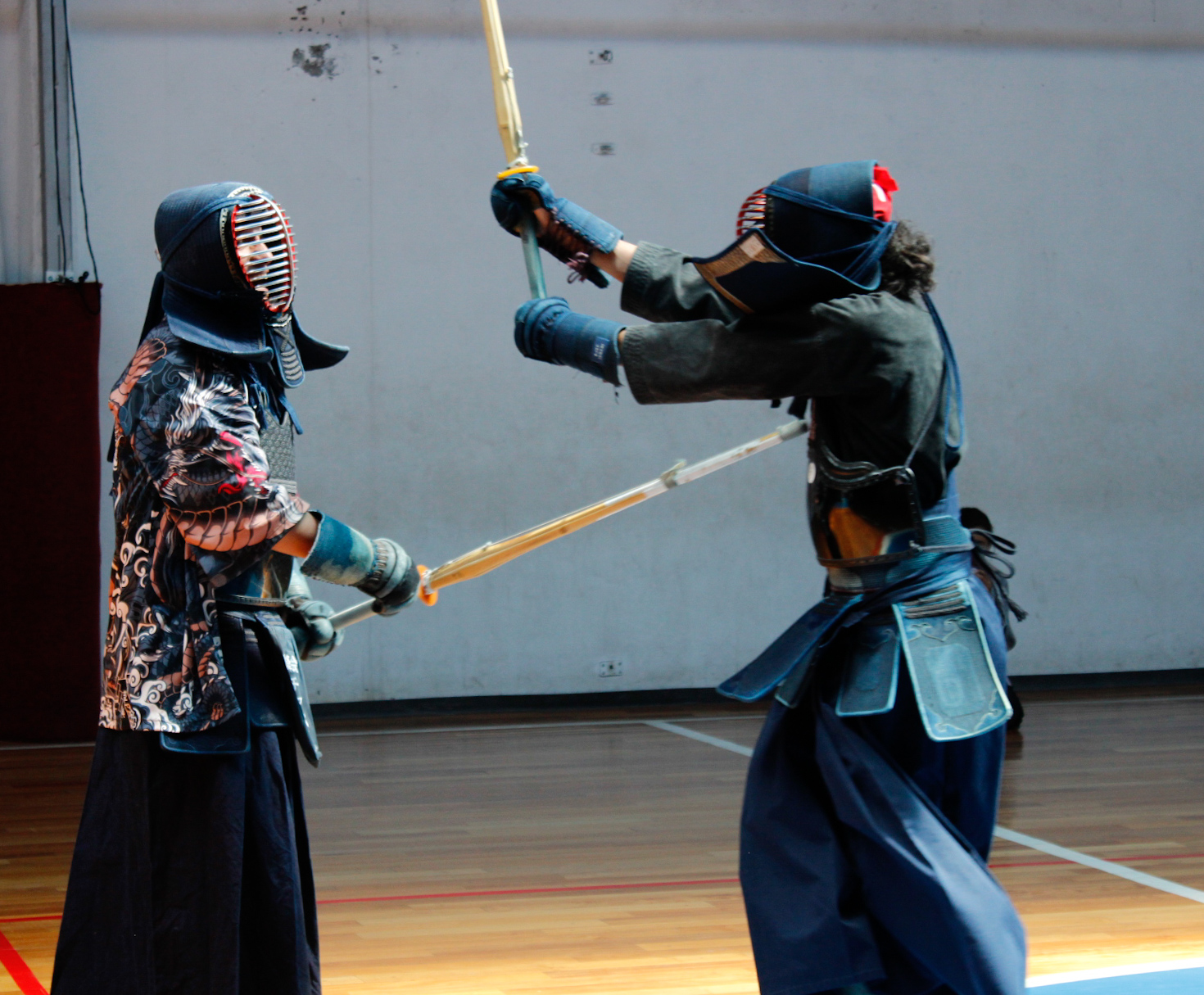
Shikake-Waza: Initiating Techniques
Shikake-waza teach you to control the flow of a match through constant pressure (seme), forcing the opponent into a reactive position. In this realm, shikake-waza often embodies sen-no-sen—creating or exploiting the moment when the opponent's guard is down through deception or disruption, then attacking with precision. Key underlying concepts include seme (pressure), sen (initiative), maai (distance), and kiai (spirit expressed vocally during the strike).
- Ippon uchi waza — single decisive strike with full commitment (men, kote, do, tsuki)
- Renzoku waza — continuous strikes to overwhelm (e.g. kote-men, kote-men-do)
- Debana waza — striking as the opponent begins to attack (debana-men, debana-kote)
- Harai / maki / hari waza — clearing the opponent's shinai to create an opening
- Osae-waza — pressing the opponent's shinai aside, then striking
- Hiki waza — stepping back from tsubazeriai to strike (hiki-men, hiki-do)
- Katsugi waza — lifting the shinai over the shoulder to mislead, then attacking
Oji-Waza: Responding Techniques
Oji-waza focus on responding to the opponent's attack rather than initiating first. Rather than flinching, you allow the opponent to attack and turn their aggression into a weakness. Oji-waza embodies go-no-sen—responding to the opponent's attack in a way that seizes control of the situation. Even in counterattacks, seme is essential to provoke the opponent into moving. Kensaki control (mastery of the shinai tip) and zanshin (lingering awareness after the counter) are equally vital.
- Nuki waza — evading the attack while countering (men-nuki-do, kote-nuki-men)
- Suriage waza — deflecting upward, then counterstriking (kote-suriage-men)
- Kaeshi waza — parrying and returning in one motion (kote-kaeshi-men, men-kaeshi-do)
- Uchiotoshi waza — knocking down the opponent's shinai, then countering
- Patience and reading the opponent's commitment are as important as speed
Sen, Maai, and the Three Forms of Initiative
Sen (先) refers to the timing of action and initiative in combat. Sen-sen-no-sen (先々の先) attacks before the opponent even begins their motion—sensing intention before it materializes. Sen-no-sen (先の先) strikes as the opponent begins their attack, using their initiative against them. Go-no-sen (後の先) responds to the attack but seizes control within the exchange. Maai (間合い) is the understanding of distance that determines when each waza can succeed. Shikake-waza leans toward sen-no-sen; oji-waza toward go-no-sen—but the finest kendoka move fluidly among all three.
- Issoku-itto-no-maai — one step forward to strike, one step back to evade
- Toma — beyond issoku-itto; neither can reach the other (stay alert)
- Chika-maai — closer than issoku-itto; both can strike easily
Technique Reference Chart
Below is a non-exhaustive reference of the most commonly practiced shikake-waza and oji-waza. Waza are taught progressively through uchikomi geiko and kakari geiko; beginners focus on basic shikake, intermediate students add oji, and advanced practitioners integrate both into free keiko. Patience in drilling ensures techniques survive the chaos of jigeiko.
Watch & learn
Further reading
- Kendo techniques overview — Wikipedia (opens external site)
Encyclopedic background on equipment, strikes, and competitive kendo.