
Post-war Kendo Evolution (1945–2024)
Kendo today is simultaneously ancient and modern: reiho and kata carry Edo values, while FIK tournaments and university clubs carry post-war democracy. This page summarises eras; the interactive timeline below lists dated milestones from occupation to the 2024 Milan WKC.
Occupation & Moratorium
All budo faced suspension; kendoka practiced quietly or pivoted to sport framing. The moral redefinition — kendo as self-cultivation — became AJKF's foundation when reorganisation was permitted.
AJKF Standardisation
Global FIK & WKC
World Kendo Championships became the quadrennial measure of national team depth. Japan's men's team won fifteen consecutive golds before Korea's 2006 victory — see competition/japan-korea-rivalry for respectful analysis.
Hong Kong & 21st Century
Humid climate, school clubs, and FIK pathways define Hong Kong kendo today. Digital media spreads technique faster but cannot replace sensei correction — post-war lesson intact.
Chronology
1945
GHQ Ban on Kendo Instruction
After WWII, SCAP policy briefly banned kendo and kenjutsu instruction as militaristic. Practitioners preserved technique through private study while public school and police programmes stopped — the deepest rupture in modern kendo history.
1950
Shinai-kyōgi Era
To regain school approval, reformers promoted shinai-kyōgi — a sport-framed fencing variant. Asahi-barai, tai-atari, grappling, and even kiai were restricted or banned at first. Size and rule experiments paved the way for kendo's later reinstatement with clearer educational framing.
1952
AJKF Founded; Size-39 Shinai Restored
The Zen Nippon Kendō Renmei (AJKF) unified post-war governance. Traditional size-39 shinai and fuller keiko culture returned alongside standardised grading and curricula. The charter emphasises disciplining character through the principles of the katana — still quoted worldwide.
1970
FIK & 1st World Kendo Championships
FIK formed to coordinate kendo, iaido, and jodo across member nations. The first World Kendo Championships in Tokyo launched the international competition calendar that still structures Japan–Korea rivalry and global exchange.
1975
Concept of Kendo Promulgated
AJKF published the Concept of Kendo and the Mindset of Kendo Instruction, clarifying that the art disciplines character through the sword's principles. These texts still guide teaching worldwide, including Hong Kong dojos.
1979
Mune-tsuki Rule Revision
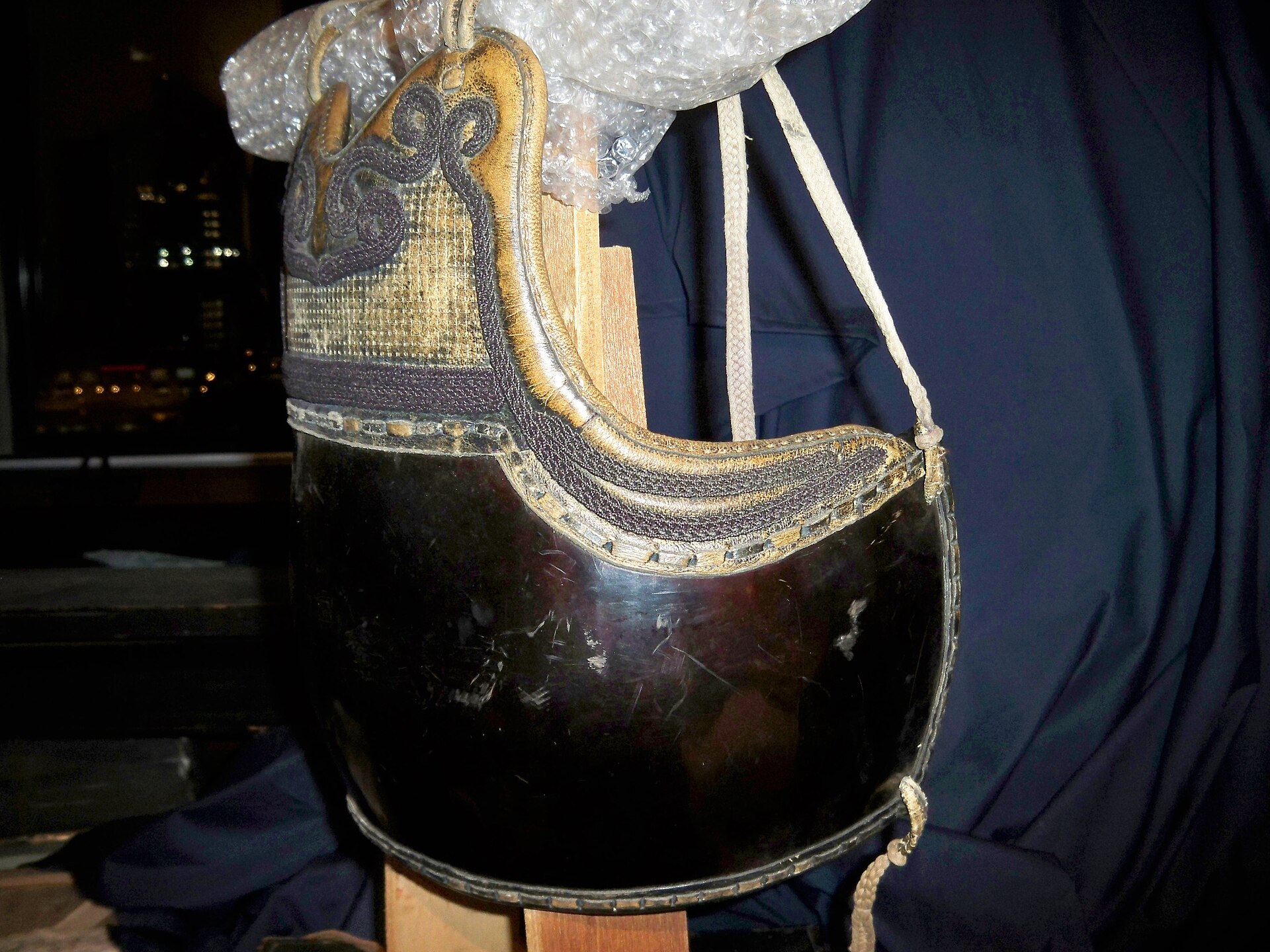
Competition rules evolved to permit mune-tsuki (thrust to the chest plate) under defined conditions for selected practitioners — a notable technical and safety debate linking tsuki waza to modern shiai standards.
1995
Jōdan Restriction Lifted (Schools)
High-school competition rules that had restricted jōdan-no-kamae were revised, reflecting ongoing negotiation between sport safety, tradition, and technical diversity in youth kendo.
1970–1990
Global Spread & University Networks
Kendo expanded through Japanese diaspora, corporate transfers, and university exchange. National federations in Korea, the USA, Brazil, and Europe matured. Technical exchange visits and joint seminars became the main conduit for teaching methodology outside Japan.
1997
16th World Kendo Championship (Kyoto)
The 1997 WKC in Kyoto showcased post-war kendo at global scale. Japan's men's team continued its historic dominance in the team event, while individual divisions highlighted rising standards in Korea, Taiwan, and Europe — setting the stage for the rivalry narratives of the 2000s.
2006
Korea Breaks Japan's Team Streak
At the 14th WKC in Taipei, Korea's men's team defeated Japan — ending a run of fifteen consecutive Japanese men's team gold medals (1970–2003). The result shocked the kendo world and accelerated tactical study of Korean seme, footwork, and team rotation systems.
2010s
Video Analysis & Sports Science
Smartphone video, slow-motion review, and fitness coaching entered mainstream dojo culture outside Japan. AJKF and FIK continued to stress traditional reiho and kata alongside shiai — debates over "sportification" versus budo identity intensified in online communities.
2015
17th WKC — Tokyo
Tokyo hosted the 17th World Kendo Championship, symbolising kendo's return to a global stage in Japan after decades of overseas growth. Japan reclaimed the men's team title; the event renewed discussion on unifying competition formats and nurturing referees internationally.
2020–2021
Pandemic Pause & Dojo Resilience
COVID-19 closed dojos worldwide. Practitioners maintained suburi at home, studied kata solo, and returned with renewed appreciation for paired keiko. Hong Kong dojos adapted ventilation, mask policies, and staggered sessions — lessons in community care parallel to kendo's emphasis on mutual support.
2024
19th WKC — Milan
The 19th World Kendo Championship in Milan underscored kendo's European growth and continued Japan–Korea excellence at the top. FIK member nations debated youth recruitment, gender equity in leadership, and how digital media shapes public understanding of budo.