
Hong Kong Kendo Beginner Entry Guide
Welcome to kendo in Hong Kong. This page is the path before the first bow: what kendo is, how to find a dojo, what to wear, and how the AJKF ideal of character cultivation applies to a busy week. Fees, rental, and the weekly timetable belong to that dojo. Heart Sword Collection is an educational portal — your sensei remains the authority for technique and grading.
First: watch, then reiho
Attend trial keiko in sports clothes. Learn seiza, mokuso, bowing lines, and basic commands. Read the HK Dojo Etiquette and Beginner's Guide modules before returning. Ask which federation the dojo belongs to and the weekly schedule.
Then: suburi and footwork
Focus on suburi, suri-ashi, and chudan kamae without bogu. Common mistakes: raised shoulders, bent wrists, and stomping without hip drive. Study the Technique Library (kihon, footwork, kamae) and practise ten minutes daily at home if space allows.
Bogu only when the sensei says so
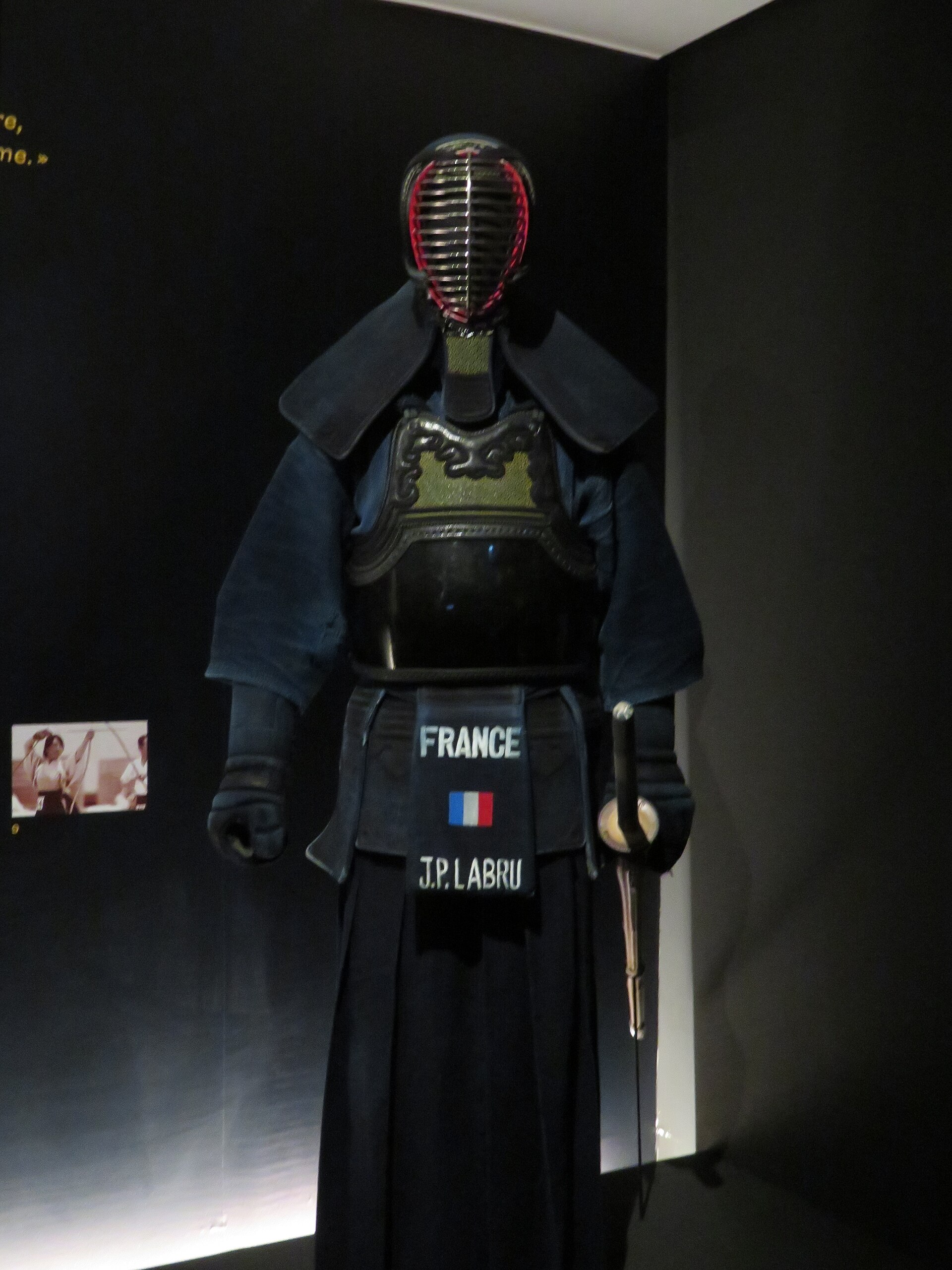
The sensei invites bogu when reiho, footwork, and the grip are reliable — not on a calendar. Rent or borrow first. Men strikes feel strong at first: breathe, bow, and continue. Drying in Hong Kong humidity is on the bogu-care page; part names are on the equipment pages.
Finding Dojos in Hong Kong
University clubs, community centres, and federation dojos operate across districts. Use the dojo directory below for club websites, attend an open practice, and observe reiho before committing. The Hong Kong Kendo Hub lists further pathways and events.
- Trial in sports clothes first
- Ask about bogu rental
- Confirm grading federation
- Check humid-season drying facilities
Pace, not a price list
Please ask the dojo about the monthly fee, whether a shinai can be borrowed, and when bogu can be rented. Two steady practices a week is a pace many adults can keep. Your sensei decides when the next stage begins.
Starting as an adult
Adults start after work in the same rooms as students: sports clothes, a bow at the door, and kihon before bogu. Soreness in the feet and shoulders is common in the first weeks. Two sessions a week is enough to learn reiho. Tell the sensei about injuries before you step on. The dojo directory is on the Hong Kong kendo page.
Hong Kong Kendo Association — chronological history
The following passages reorganise material from the Hong Kong Kendo Association 50th Anniversary Commemorative Publication (香港劍道協會 50 週年紀念特刊), section「協會發展史」, by decade and year. Names and dates follow that booklet; editions after the booklet follow the association’s later notices.
1. Beginnings and founding (late 1960s–1970s)
Late 1960s: Japanese businessmen who loved kendo met after work in Hong Kong and gradually introduced the art to local partners. With little publicity, most residents still did not know kendo; newcomers usually arrived through friends. 1971: Mr Chu Wun-lin, with Mr Isamu Sato (later Secretary General of the International Kendo Federation) and Mr Wai, founded the Hong Kong Kendo Association; Mr Wai was the first president, and Mr Chu succeeded him a few years later. Early venues were scarce — the Seamen’s Club library, Repulse Bay International School, and a rooftop dojo at Mr Chu’s home for kendo and iaido. 1975: HKKA joined the FIK. That year, JAL Hong Kong branch manager Mr Shigenobu Tanaka led the first Japan Airlines goodwill team visit; FIK sent a senior teaching group led by Mr Kyu Ozawa (9-dan hanshi), with Mr Hachiro Tsubouchi, Mr Nagamasa Nagai (both 8-dan hanshi), and Mr Koichi Matsukawa (6-dan kyoshi); HKKA also sent representatives to the First World Kendo Leaders Summer Camp in Saitama under the All Japan Kendo Federation. 1976: Mr Chu Wun-lin, Mr Ma Wing-tak, and Mr Chan C. W. represented Hong Kong at the Third World Kendo Championships in the United Kingdom.
2. Roots and institutions (1980s)
1980: Queen Elizabeth Stadium in Wan Chai opened and gradually became the association’s main practice hall; the Japanese International School continued to lend space into the early 1990s. From the mid-1980s, teacher Mr Tadashi Yoshida worked closely with HKKA and introduced Principal Mr Akihiro Kaku, who raised local standards and eased the shortage of venues. 1981: with FIK assistance, HKKA held its first local dan examination. 1982: Mr Jun Takeuchi of Mitsubishi Corporation was posted to Hong Kong and helped raise standards; after returning to Japan he became Secretary General of the All Japan Kendo Federation. 1988: Mr Kazuo Horibe coached the Hong Kong team; his daughter Ms Akemi Horibe later founded Tokushinkan.
3. Affiliated dojos and local events (late 1980s–1990s)
1989: President Chu stepped down and emigrated to Canada. Before leaving he set development policy, built links with the government’s sports department, and with core members drafted a constitution with a committee system and an elected presidency. The same year, the first affiliated dojo — Yu’s Kendo Club (later Seidokan) — was founded by Mr Yu Kwok-chiu. Early 1990s: the Asian Open invitational began. Mid-1990s: Hong Kong–Macau exchange started; after 2000, 7-dan teachers in Hong Kong gradually built mainland contacts, and exchange among Hong Kong, the mainland, and Macau settled into a steadier rhythm. 1992: Sekishinkan was founded by Mr Lai Fu-yan (7-dan). Within a few years local practitioners numbered more than five hundred across three affiliated dojos — Yu’s, Vajra, and Sekishinkan. 1994: HKKA was incorporated as a limited company under Hong Kong law. 1996: Mr Masaru Shiikawa, posted to Beijing and Shanghai, practised with Japanese and Korean kendoka and gradually aroused local interest — the start of kendo’s postwar growth on the mainland. 1998: with association support, Sekishinkan held the first inter-dojo President’s Trophy; later editions continued under HKKA through the 23rd (paused in 2020 because of COVID-19).
4. Toward the international stage (2000s)
2000: Mr Kenichiro Shimomura was appointed Hong Kong team coach and manager for the 11th World Kendo Championships in Santa Clara, USA; Mr Masahiro Horibe received honorary membership. 2001: under president Wong Po-kit, with senior members’ support, the early-1990s invitational became the annual Hong Kong Asian Open Kendo Championship at Hong Kong Park Sports Centre. Teams from mainland China, Macau, Chinese Taipei, Vietnam, Thailand, Singapore, Malaysia, Indonesia, the Philippines, Korea, Japan, and Russia took part over the years. 2003–2009: Mr Wong served as FIK Treasurer. 2005: with LCSD support, HKKA added the Greater China Cup to encourage exchange among the mainland, Chinese Taipei, and Macau — fourteen editions in the booklet’s count (paused from 2019 because of COVID-19). 2007: local dan examinations rose to fifth dan. From the 1990s the association could already examine to third dan locally; with Mr Yoshida’s introductions, senior members sat fourth and fifth dan in Miyazaki, Japan. 2008: HKKA held its first Novice Championship. The same year its article collection published the low-ceiling essay: in rented rooms and home dojos the standard swing hit the ceiling, so Ms Akemi Horibe used a shortened shinai so indoor keiko could continue — a Hong Kong equipment response to crowded venues, not a Japanese custom.
5. Popularisation and youth (2010s)
2010: the Junior Championship was added. 2012: the Hong Kong Kendo Junior Squad Training Scheme began, along with a university trophy and children’s events. With LCSD support, national-squad members gained extra weekly training and more exchange abroad. 2019: the first Asia Open Iaido invitational was held — the first international iaido event in China; the Greater China Cup paused from this year because of the pandemic.
6. Pandemic and return (2020s)
2020: the Asian Open (19th) and the President’s Trophy (23rd) paused because of COVID-19 and travel limits; Mr Shoji Sasahara received honorary membership. 2023: the 50th-anniversary booklet recorded the hope of resuming events that year. 28–29 March 2026: the 22nd Hong Kong Asian Open Kendo Championship returned at To Kwa Wan Sports Centre, with a 1–5 dan examination; the 19th Regional Kendo Championships and the 4th Asia Open Iaido invitational have also been announced. Today the association summarises about 11 affiliated dojos and 500 members, including university clubs at HKUST, HKU, CityU, HKSYU, and HKBU. Official recaps of the 22nd Asian Open, the 25th President’s Trophy, and the novice and junior championships are on the association’s YouTube channel. The Greater China Cup’s latest edition should be confirmed on hongkongkendo.com rather than assumed from the booklet alone.
Watch & learn
Frequently asked questions
- May I ask about the cost of practice in Hong Kong?
- Monthly fees, deposits, and rental differ by dojo. The current figures are given by the dojo before one joins.
- What age can start kendo?
- Children and adults both practise in HK; adults are welcome with no upper age limit if medically fit.
- Is 香港劍道考段 available locally?
- Yes — through federation-affiliated dojos. See the grading page and your sensei for eligibility.