
History & Evolution of Kendo
Kendo's history spans over a millennium of Japanese sword culture, yet the modern form we practice today crystallized only in the late nineteenth and early twentieth centuries. Understanding this evolution clarifies why kendo balances deadly seriousness with structured sport, and why its etiquette runs so deep.
Ancient & Medieval Roots
Japanese swordsmanship emerged from battlefield necessity during the Heian and Kamakura periods, evolving into distinct ryu-ha (schools) by the Muromachi era. Masters such as those of the Katori and Kashima traditions systematized technique, philosophy, and training methods that would influence all later arts.
Edo Period Refinement
Two centuries of peace under the Tokugawa shogunate shifted sword arts from battlefield survival to personal cultivation and dueling theory. Protective gear experiments began, and philosophical texts like the Hagakure and Gorin no Sho shaped the warrior ethos that kendo still embodies.
Meiji Modernization
The Haitorei edict of 1876 banned public sword-carrying, forcing sword arts to reinvent themselves. Police instructors and educators like Sakakibara Kenkichi promoted gekiken with protective equipment, leading to the 1912 Dai Nippon Teikoku Kendo Kata and the 1920 establishment of the Dai Nippon Butoku Kai's unified standards.
- 1876: Sword-carrying banned
- 1912: Standard kata adopted
- 1920: Butoku Kai unification
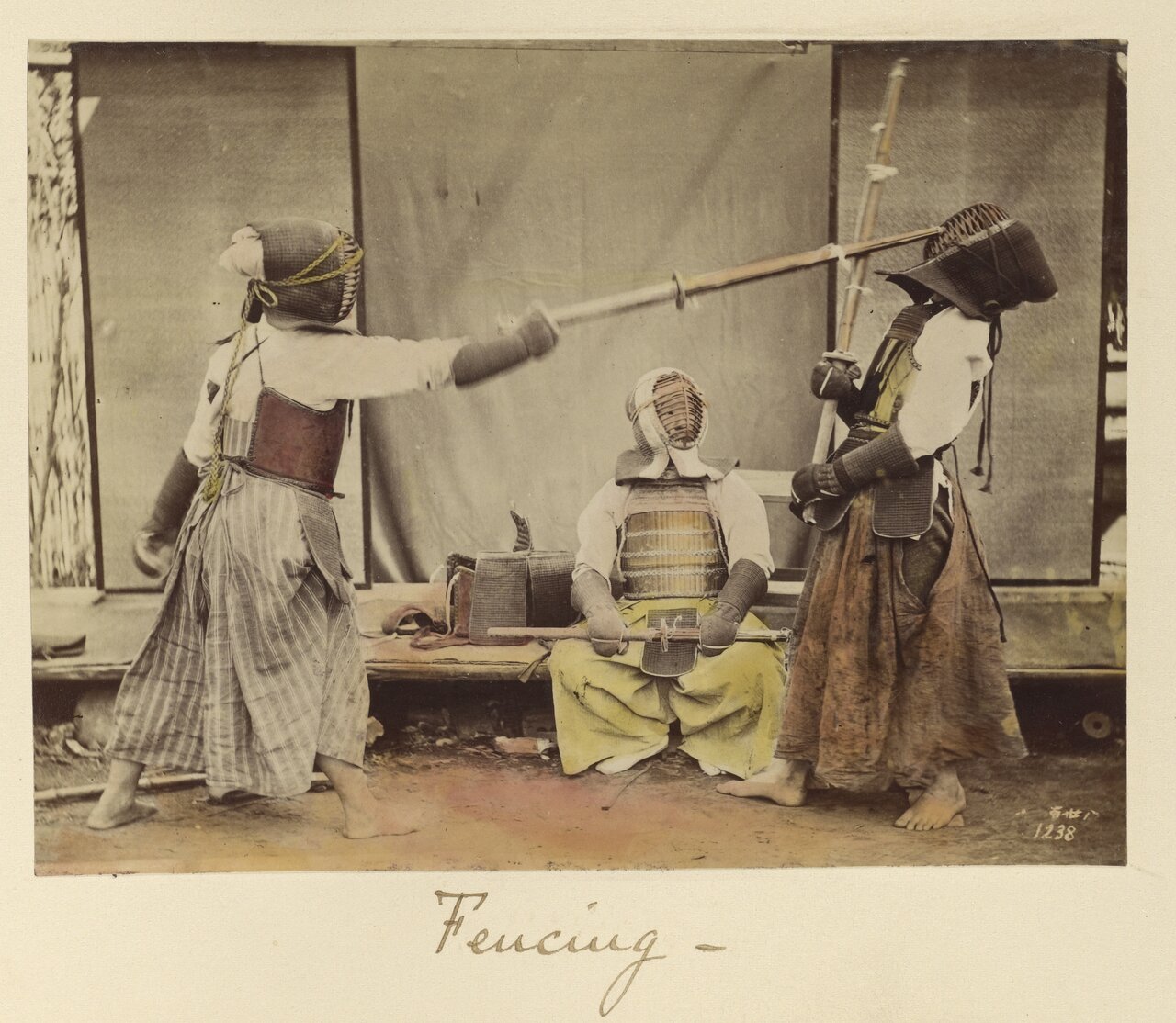
Postwar & Global Spread
Kendo was banned briefly after World War II, then restored as a educational and cultural practice. The All Japan Kendo Federation formed in 1952, and the International Kendo Federation in 1970, carrying kendo to every continent. Today millions practice worldwide while honoring Japanese roots.
| Japan | International | National | Local |
|---|---|---|---|
| All Japan Kendo Federation | International Kendo Federation | National federations | Dojo associations |
| Prefectural associations | Continental unions | Grading standards | Community clubs |
| University leagues | World championships | Coach certification | School programs |