
Etiquette & Reiho
Reiho—etiquette—is the visible expression of kendo's inner spirit. Every bow, every word, and every gesture in the dojo communicates respect for the art, the teacher, fellow practitioners, and the space itself. Without reiho, technique becomes empty athleticism; with it, keiko becomes a path of character.
Entering and Leaving the Dojo
The dojo is a place of austere training honoured as sacred space—the kamiza (joseki) is where sensei sits, furthest from the door. Bow toward the shomen when entering and leaving. Arrive early, remove shoes before entering (never walk to the dojo barefoot), and never step over a shinai or bokuto.
- Bow toward shomen when entering and leaving the dojo
- Senior students sit furthest from the door on shimoza (lower seat)
- Remove shoes before stepping onto the floor — never walk to the dojo barefoot
- Never step over a shinai or bokuto lying on the floor
- Arrive early to prepare mentally and help set up
- Treat the dojo as sacred space for austere training
- Bow upon entering and leaving the dojo
- Never step over shinai or bogu
- Maintain silence during instruction
- Line up by rank before and after keiko
Seiza and Mokuso
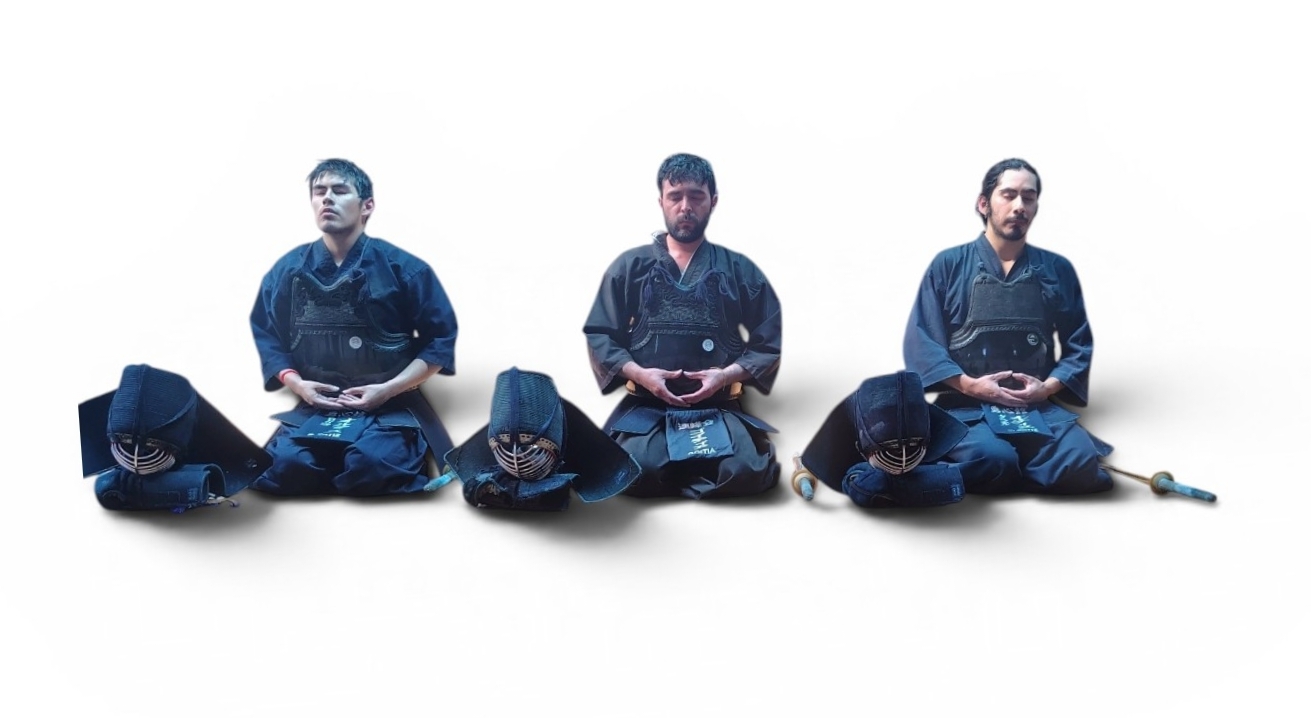
Seiza is formal kneeling: knees about 20 cm apart, feet slightly crossed, back straight. Sit by lowering the left knee first; rise with the right foot first—hands never touch the floor. Once seated, do not adjust while a senior speaks. Mokuso: eyes lightly closed, hands palm-up in the lap, thumbs touching, breathing slowly from the abdomen.
- Seiza: knees about 20 cm apart, feet slightly crossed, back straight
- Sit by lowering the left knee first; rise with the right foot first—hands do not touch the floor
- Mokuso: eyes lightly closed, hands palm-up in the lap, thumbs touching, slow abdominal breathing
- Chakuza (cross-legged) is permitted when relaxed sitting is allowed—keep back straight, feet covered by hakama
Opening & Closing Ceremony
At the start of keiko the sempai calls commands to line up on the shimoza, sit, meditate, bow to shinzen or kamiza, bow to sensei, and don men and kote. Closing reverses the order: remove bogu, mokuso, bow to sensei, kamiza, and each other. Each dojo may vary slightly.
- — Opening —
- Sei-retsu — line up (senior students furthest from the door on shimoza)
- Seiza or chakuza — sit in formal kneeling or cross-legged
- Mokuso — meditate quietly; Yame — stop
- Shinzen-ni-rei / Shomen-ni-rei — bow to the shrine or kamiza
- Sensei-ni-rei / Gata-ni-rei — bow to the teacher(s)
- Men-tsuke — put on tenugui, men, and kote
- — Session flow —
- Enter and leave the dojo with a bow — it switches your mindset from daily life to training
- Line up neatly; place equipment in order even without a leader
- Mokusō: close eyes, left hand on right palm-up, breathe in through nose and out through mouth
- Yame: open eyes and return hands to thighs
- Opening bows: shōmen first, then sensei, then each other
- — Closing —
- Sei-retsu — line up
- Seiza or chakuza — sit down
- Men-tore — remove kote, men, and tenugui
- Mokuso — meditation; Yame — stop
- Sensei-ni-rei — bow to teacher
- Shinzen-ni-rei / Shomen-ni-rei — bow to kamiza
- Otagai-ni-rei — bow to each other in thanks
- — End bow order —
- Closing: line up, seiza, men-tore (remove men), mokusō
- Closing bow order reverses: sensei first, then shōmen, then each other
- Stay in seiza during sensei's closing talk — do not pack bogu until dismissed
Kamiza, Shimoza & Seating
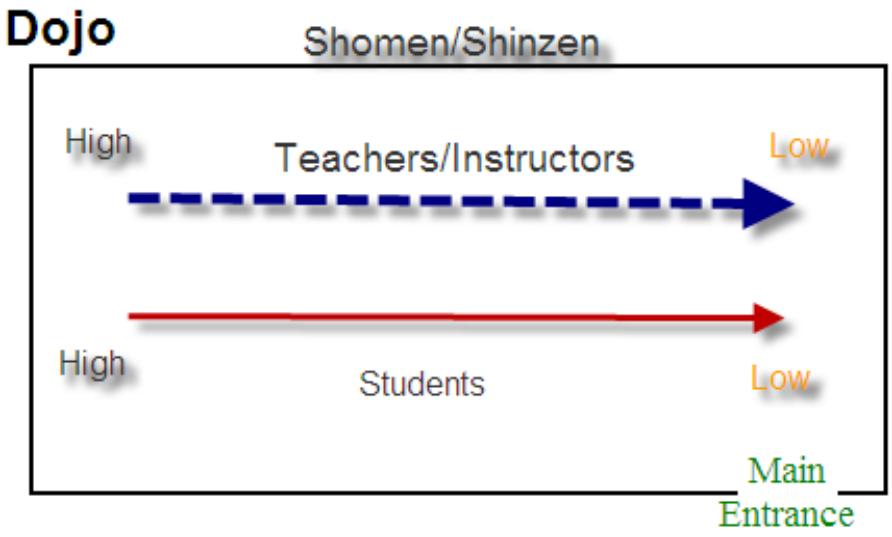
Kamiza is the upper seat for high ranks; shimoza is the lower seat for juniors. Shōmen faces away from the main entrance — seniors line up furthest from the door. This seating derives from samurai tradition: juniors near the entrance defended first. When visiting a Japanese dojo you are not a guest — do not sit at kamiza.
- Kamiza (上座) = upper seat for high ranks; shimoza (下座) = lower seat for juniors
- Shōmen faces away from the main entrance — kamiza is furthest from the door
- Teachers line up in grade order, highest rank furthest from the entrance
- Seating derives from samurai tradition: juniors near the door defend first
- At a Japanese dojo you are not a guest — do not sit at kamiza when visiting
- In ordinary Japanese rooms guests sit at kamiza; in a dojo you follow rank, not guest status
Zarei and Ritsurei
Zarei is the kneeling bow: lean forward without raising the hips, place fingertips on the floor briefly, eyes on the opponent. Ritsurei is the standing bow—about 15° to an opponent, 30° to kamiza—arms at the sides, shinai tip pointing down. Rei to sensei and fellow students deepens the dojo community.
- Zarei (kneeling bow): lean forward without raising the hips; fingertips briefly touch the floor; eyes on the opponent
- Ritsurei to an opponent: about 15°
- Ritsurei to kamiza / shinzen: about 30°
- Arms at the sides; shinai tip pointing down during standing rei
- Bow upon entering and leaving the dojo
- Never step over shinai or bogu
- Maintain silence during instruction
- Line up by rank before and after keiko
Prohibited Behaviour in the Dojo
The dojo is not a living room — separate yourself from ordinary relaxed behaviour. Traditionally you remove coat and hat as you remove outdoor shoes. Only seiza or agura are permitted unless injury prevents both. Eating and chewing gum are forbidden; drinking water during keiko is now generally allowed.
- Not bowing when entering or leaving
- Wearing coat, jacket, or hat inside (traditionally removed like outdoor shoes)
- Sitting with legs stretched out, one knee up, or lying on the floor
- Only seiza or agura (cross-legged) unless injury prevents both — ask your sensei
- Eating or chewing gum; drinking water is now generally allowed during keiko
- The dojo is not a living room — separate yourself from ordinary relaxed behaviour
Equipment Etiquette
Carry shinai with the blade edge facing up or toward yourself. Never lean on shinai or step over bogu on the floor. Adjust bogu only from seiza; ask permission before touching another person's armour. Pack bogu away properly before leaving—practice is not finished until equipment is stored with care.
- Wipe sweat from each bogu piece after keiko
- Air-dry men, kote, and do before packing
- Fold and store tare, do, kote, and men in the correct order
- Practice is not finished until equipment is stored with care
Rei in Keiko and Shiai
Bow before and after every partner exchange in keiko. In shiai, sonkyo and match rei are mandatory regardless of competitive intensity. Thank your opponent after jigeiko even when exhausted. Rei transforms conflict into mutual improvement.
Frequently asked questions
- Why is reiho essential in kendo?
- Reiho trains respect, humility, and sincerity — the foundation of character cultivation (人格陶冶).
- What if a bow is forgotten during keiko?
- Pause, offer the bow, and continue. Seniors expect a beginner to learn this over time.