
Referee System
Kendo referees (shinpan) hold enormous responsibility—they must evaluate ippon in seconds, applying five criteria with consistency and fairness. The three-referee system used in modern competition provides checks and balances, while referee training ensures standards remain high across all levels of shiai.
Three-Referee System
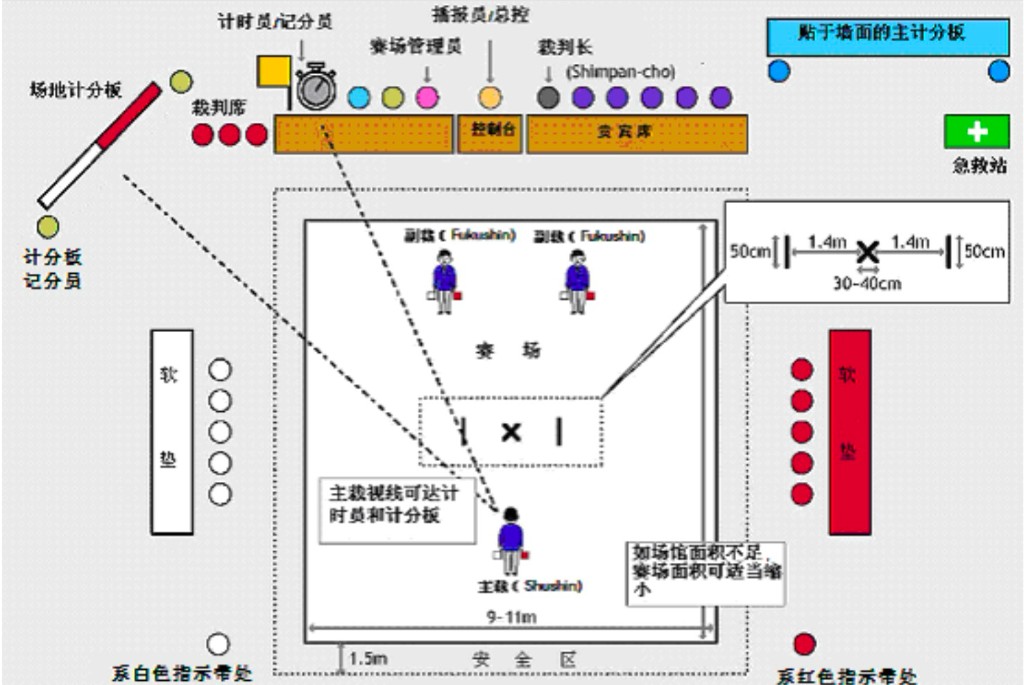
Each match is overseen by three shinpan: one shushin (chief referee) and two fukushin (assistant referees). For ippon to be awarded, at minimum the shushin and one fukushin must raise their flags simultaneously. This system reduces individual bias and error.
Flag Signals
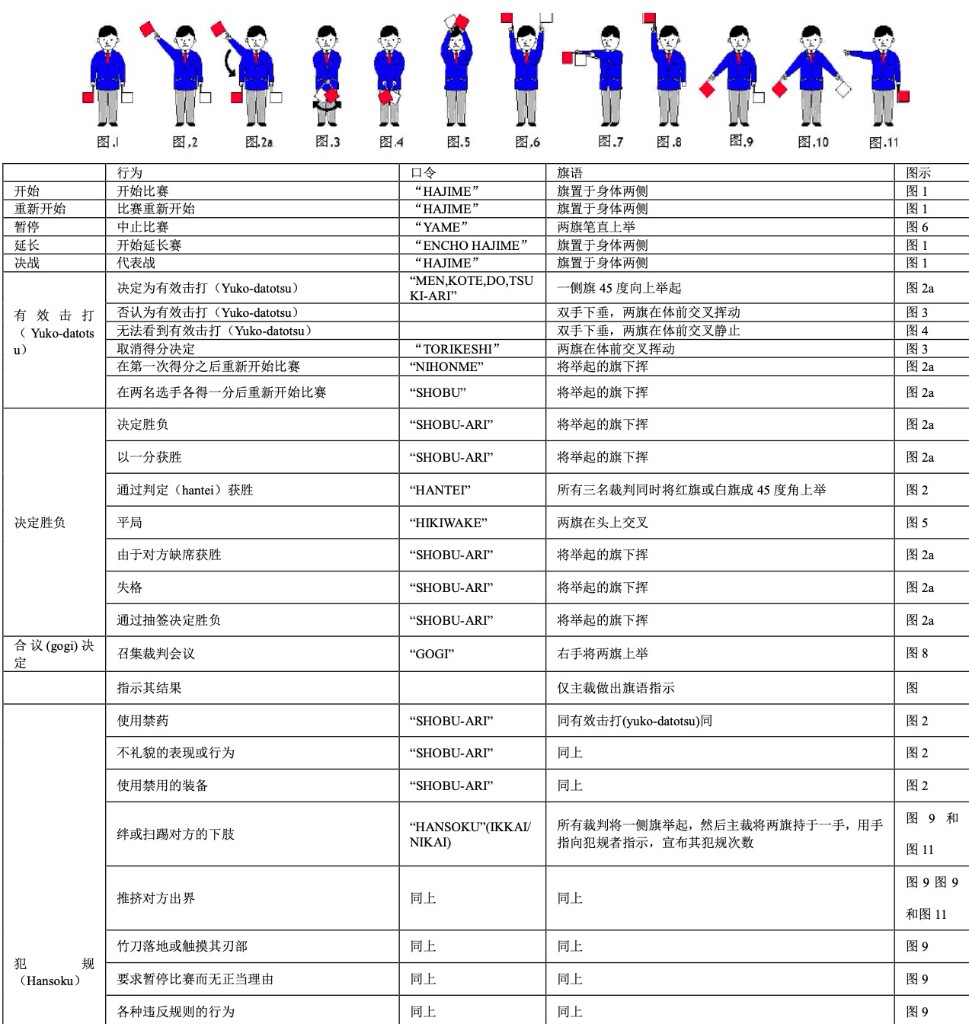
Referees use red and white flags corresponding to competitor nafuda (name tags). Raising a flag forward signals ippon for that competitor; crossing flags indicates no score. Other signals include hansoku (violation), time calls, and match end. Clear, decisive flag work is a hallmark of trained shinpan.
Positioning and Movement
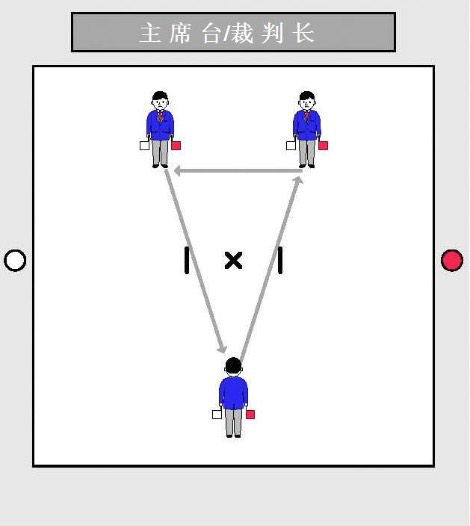
Referees move along the court edges, maintaining angles that allow clear view of strikes, footwork, and zanshin. The shushin typically follows the action laterally, while fukushin cover opposite corners. Proper positioning is taught in referee seminars through video review and practical exercises.
Becoming a Shinpan
Referee certification requires dan rank, experience as a competitor, and completion of federation referee courses. Candidates study the rulebook, practice flag signals, and shadow experienced shinpan before officiating. Many senior kendoka consider referee service a duty that gives back to the community.
- Set clear goals before each keiko
- Prioritize correct form over speed
- Accept corrections with sincerity
- Maintain reiho throughout practice