
Kendo Posture & Stances (Kamae)
Kendo posture starts with kamae — combative stances that position the sword, body, and spirit relative to the opponent. Chudan-no-kamae is the foundation from which nearly all modern kendo proceeds, but mastery of alternative kamae expands tactical options in keiko and shiai. Beginners searching for correct kendo posture should first stabilize chudan before exploring jodan, gedan, or hasso.
Chudan-no-Kamae
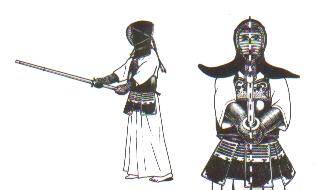
Chudan is the standard middle guard: sword tip aimed at the opponent's throat, elbows relaxed, center line protected. Raising the head (atama o okosu) keeps the center of gravity over the hips; keep the left forearm off the torso so the left arm can engage. These foundations must be internalized before exploring other stances.
Left Hand Position
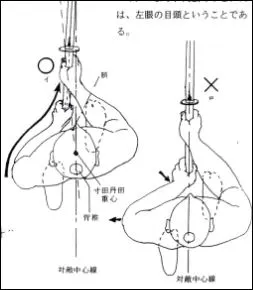
To set the left hand (hidari-te), keep the forearm from touching the do. When the forearm rests against the torso, the muscles of the left arm cannot engage—reducing control of the shinai and weakening every strike from chudan.
Jodan-no-Kamae
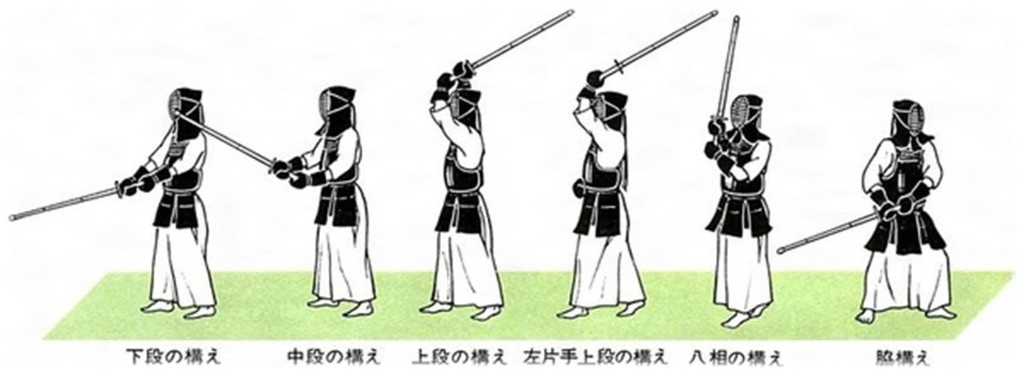
Jodan raises the sword above the head, exposing the body but threatening a powerful downward strike. Keep the shoulders open—not hunched—or the head drifts forward and the arms lose mobility. Left and right jodan variants exist, each with distinct tactical applications.
- Chudan-no-kamae: sword tip aimed at the opponent's throat; elbows relaxed
- Jodan-no-kamae: sword raised above the head; shoulders open, not hunched
- Gedan-no-kamae: sword tip lowered toward the opponent's knee
- Hasso-no-kamae: sword held vertically beside the head
- Waki-gamae: sword hidden at the hip for deception
- Metsuke: see the whole opponent like looking at a distant mountain
Gedan, Hasso, and Waki
Gedan lowers the sword tip toward the opponent's knee, inviting attacks to be countered. Hasso holds the sword vertically beside the head, historically common and still used in kata. Waki hides the sword at the hip, creating deception and close-range opportunities. Metsuke (gaze) should see the whole opponent like looking at a distant mountain, without fixing on one spot.
- Chudan-no-kamae: sword tip aimed at the opponent's throat; elbows relaxed
- Jodan-no-kamae: sword raised above the head; shoulders open, not hunched
- Gedan-no-kamae: sword tip lowered toward the opponent's knee
- Hasso-no-kamae: sword held vertically beside the head
- Waki-gamae: sword hidden at the hip for deception
- Metsuke: see the whole opponent like looking at a distant mountain
Kamae and Mental Pressure
A strong kamae projects seme (pressure) that can disrupt an opponent before any strike. The eyes, breathing, and subtle shifts of the sword tip all contribute to seme. Maintaining chudan while receiving seme is one of the highest skills in kendo.
Five kamae, with the lead foot set
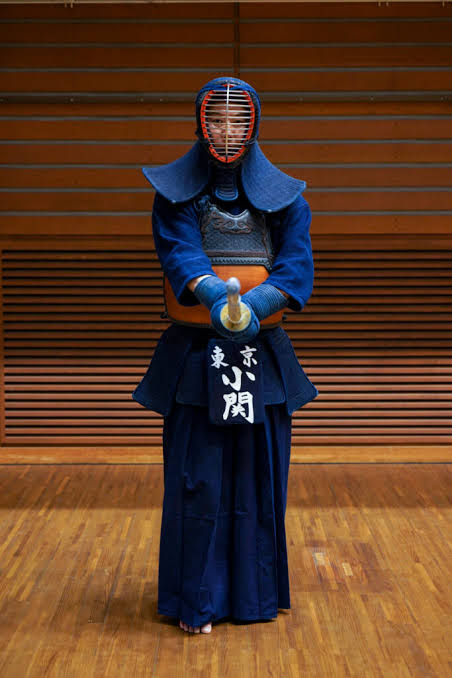
Chudan keeps the right foot forward and the left foot back, about shoulder width, with the left heel only slightly raised. The left hand holds the tsuka-gashira a fist in front of the navel; the right hand rests lightly about a fist above the tsuba, both thumbs forming a V along the shinai. The kensen points at the throat, near eye height, and the shoulders stay down. Treat chudan as the core. Try the other kamae once it is steady. Jodan uses the same feet with the weight a little forward, the shinai overhead and the tip about forty-five degrees back. Gedan points the tip toward the opponent’s left knee, inviting men so you can answer kote or do. Hasso stands the shinai in front of the right shoulder, the tip toward the opponent’s right eye. Waki turns the body about forty-five degrees and may put the left foot forward so the shinai hides behind the right hip. These five are sometimes called the five kamae. The notes on difficulty are teaching cues, not an official scale.
- Chudan: right foot forward, kensen at the throat, shoulders down
- Jodan: same feet, shinai overhead, do and kote left open
- Gedan: tip toward the opponent’s left knee, inviting men
- Hasso: shinai in front of the right shoulder
- Waki: body turned, left foot may lead, shinai hidden at the right hip
Watch & learn
Further reading
- Chūdan-no-kamae — Wikipedia (opens external site)
Overview of the five kendo stances and why chudan is the foundation.
- How to Take Chudan — Kendo-Guide.Com (opens external site)
Step-by-step chudan posture notes for beginners.