
Complete Guide to Dojo Etiquette in Hong Kong
This page is for a first visit and for anyone who has not yet learned the bows. You leave knowing how to enter, sit, and leave a Hong Kong dojo. Hong Kong dojos share the same reiho foundations as dojos worldwide, yet local practice reflects compact urban venues, multilingual instruction, and a community that blends Cantonese, English, and Japanese terminology. This guide walks you through every stage of a typical keiko — arrival, opening ceremony, practice, and departure — so you can train with confidence and sincerity whether you visit a university club, community centre, or established federation dojo.
Before You Enter
Remove outdoor shoes at the entrance and change in the locker area. Kendogi and hakama should be clean and properly tied; shinai should be inspected for splinters. In Hong Kong’s humid climate, bogu is left to dry fully between sessions. Dry armour is a courtesy to the people who share the room. Bow mentally toward the shomen before stepping onto the wooden floor, even if no one is watching.
- Arrive early to help set out equipment
- Greet sensei and seniors with a standing bow
- Never walk across the dojo floor in street shoes
- Silence mobile phones completely
Kamiza, Shimoza & Line-up
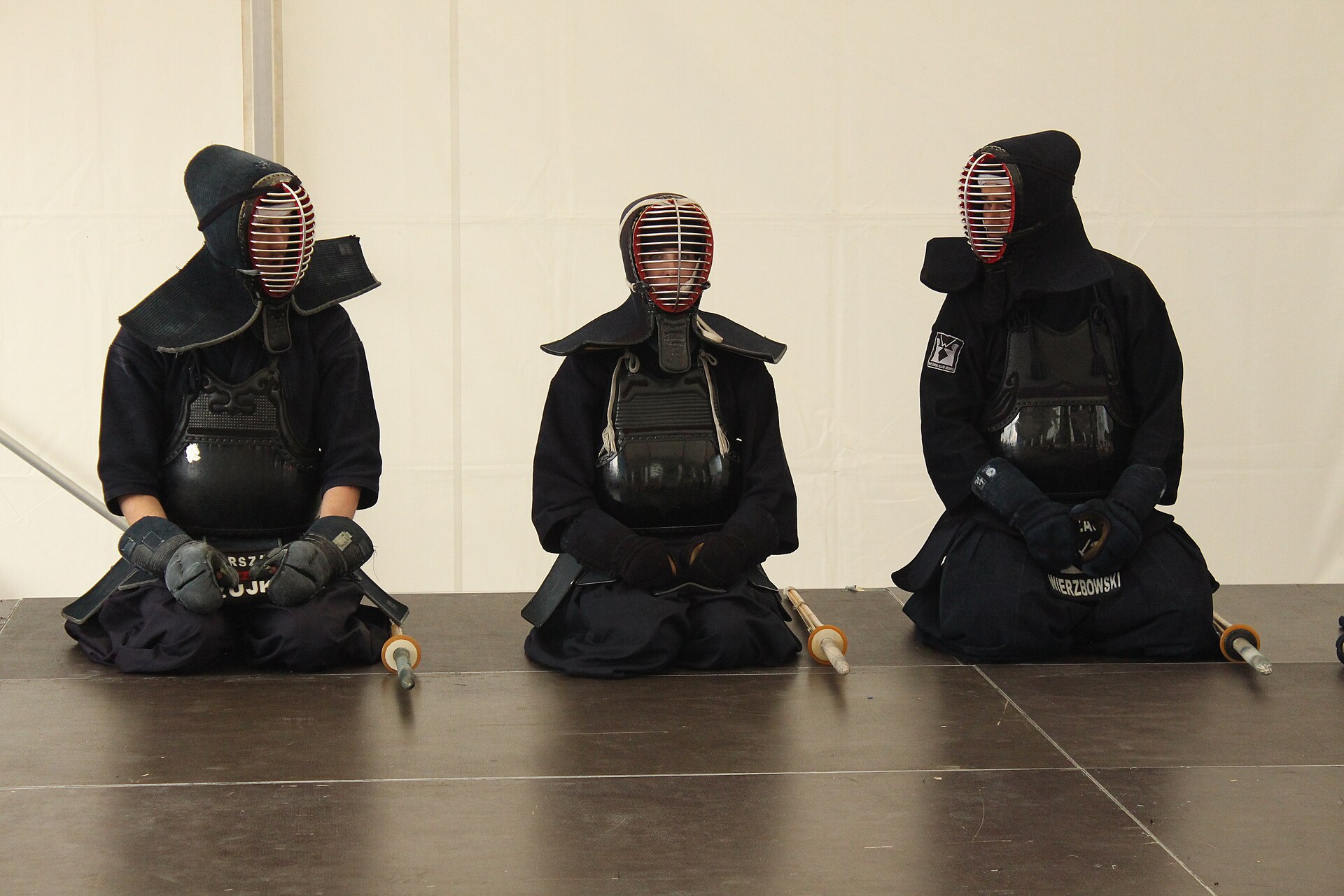
The kamiza (joseki) is the honoured side of the dojo — often where a kamidana, federation flag, or photograph of a master is placed. Sensei sits nearest the kamiza; students line up on the shimoza (lower side), typically ordered by grade with seniors closest to the centre. In Hong Kong university dojos, space may be limited; follow sempai instructions rather than guessing rank order. When lining up, hold shinai in the left hand, edge upward, standing at attention.
- Bow upon entering and leaving the dojo
- Never step over shinai or bogu
- Maintain silence during instruction
- Line up by rank before and after keiko
Opening Ceremony (Shikake)
The sempai calls "Seiretsu" to line up, then "Chakuza" or "Seiza" to sit. Mokuso follows — close the eyes lightly, breathe from the abdomen, and let the concerns of the day fall away. Bow to shinzen (or kamiza), then to sensei ("Sensei ni rei"), then don men and kote when instructed. In Hong Kong, commands may be given in Japanese with brief Cantonese or English explanation for newcomers; learn the Japanese terms gradually, as they are universal across dojos.
During Keiko
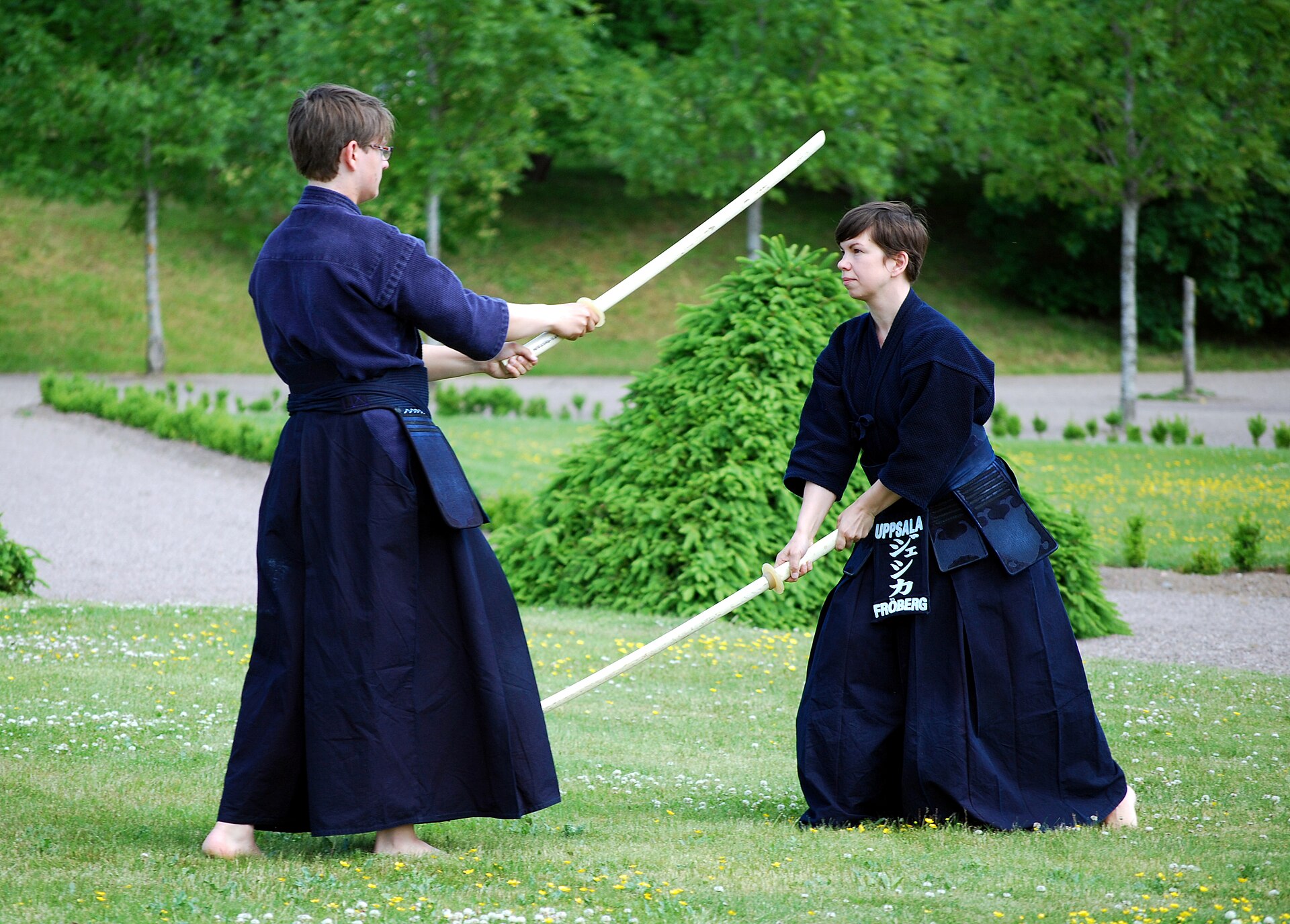
Bow to your partner before and after every exercise ("Onegai shimasu" / "Arigatō gozaimashita"). Maintain focus — conversation on the floor is minimal. If you must adjust bogu, return to seiza at the side. When receiving instruction, kneel and listen without interrupting. Hong Kong dojos often run intensive sessions in air-conditioned rooms; stay hydrated but return to the line promptly. Treat every partner as your teacher for that moment.
- Never point shinai at a person's face off the floor
- Acknowledge corrections with "Hai"
- Yield floor space to senior pairs during jigeiko
Visiting to watch
A visit (kengaku) means watching practice before you join. Book through the dojo’s official page and wait at the entrance; do not walk into the training area. Wear clean sports clothes and white socks, not shorts or sandals, and leave hard jewellery at home. Bow toward the front, then greet the sensei and seniors. Silence the phone. Do not eat, drink, or take calls on the floor. Do not touch shinai, bogu, or mirrors, and do not step onto the floor, without permission. Watch quietly. Do not comment, laugh at a mistake, or photograph or film unless the whole dojo has agreed. Afterwards you may ask the sensei a question, then bow again as you leave. If you want to join, ask that dojo how enrolment works. A trial class, when one is offered, is listed on the association’s official course page. Anyone can start from reiho, the grip, and footwork. Dan certificates issued by the Kendo Association of Hong Kong, China are those of an FIK member; the notice for that year states who may sit. Cost, age, time to shodan, and soreness are answered on the linked notes. Bogu timing stays with the sensei.
- Book on the dojo’s official page and wait to be shown in
- Clean sports clothes, white socks, no hard jewellery
- No photos or filming unless the whole dojo agrees
Closing & Leaving
Closing reverses opening: remove kote and men, mokuso, bow to sensei, kamiza, and partners (otagai-ni-rei). Pack shinai and bogu neatly; wipe sweat from the floor if asked. Bow once more toward shomen when leaving the floor. In shared Hong Kong sports centres, vacate promptly so the next group can set up — but never rush the final rei. Carry the calm you found in mokuso into the street.
Frequently asked questions
- Do Hong Kong dojos use Japanese or Cantonese commands?
- Most use standard Japanese terms (seiretsu, mokuso, hajime). Seniors often explain in Cantonese or English for beginners.
- What should I wear to my first visit?
- Comfortable sports clothing is fine for observation. For keiko, borrow or rent keikogi and hakama until you have your own.
- Is it rude to arrive late in Hong Kong?
- Yes. Arrive early to bow in quietly. If unavoidably late, wait at the entrance for permission before joining.