
Bogu (Protective Armor)
Bogu is the protective armor that allows kendoka to strike with full spirit while minimizing injury. Developed over centuries and standardized in modern kendo, each component—men, kote, do, and tare—protects a specific target zone. Proper fitting and care are essential for safety and longevity.
Dressing in Full Bogu
A kendoka enters keiko dressed in layers: keikogi and hakama first, then from seiza in the order tare, do, tenugui, kote, and men. Each piece has a specific name and function. The illustration shows how the complete outfit fits together before practice begins.
- 1. Tare — waist protector first
- 2. Do — chest guard over the tare
- 3. Tenugui — head cloth folded and tied before the men
- 4. Kote — gauntlets, left then right
- 5. Men — head guard last; check men ties and tsuki-dare
- Adjust bogu only from seiza; ask before touching another's armour
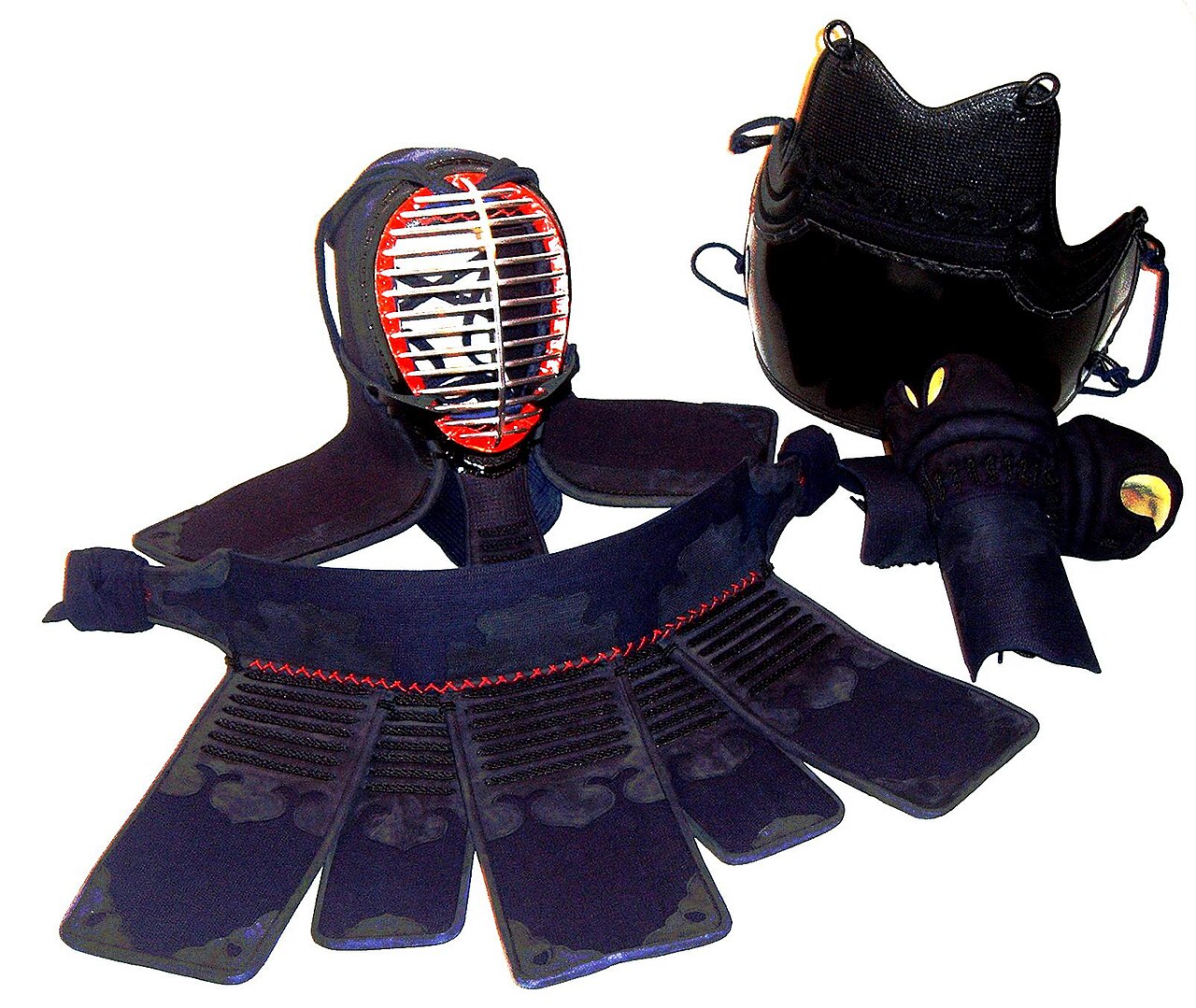
Starter Kit & Sizing
You do not need every piece of equipment on day one. Start with bokutō, then add keikogi, hakama, and shinai as commitment grows. Shinai is required for partner practice — never strike with bokutō. Bogu must fit correctly: too large or too small fails to protect. Avoid flashy beginner sets; upgrade gradually as skill develops.
- Full kit: bokutō, shinai, keikogi, hakama, and bogu — but beginners need not buy everything at once
- At minimum start with bokutō; add keikogi, hakama, and shinai gradually
- Shinai is required once you practise with a partner — never strike with bokutō
- Bōgu size must be correct: too big or too small fails to protect you
- Avoid flashy equipment with decorative dō — stick to traditional beginner sets
- Do not buy US$5,000 bogu at the start; upgrade as skill and commitment grow
- Follow shop measuring instructions or ask the retailer before ordering
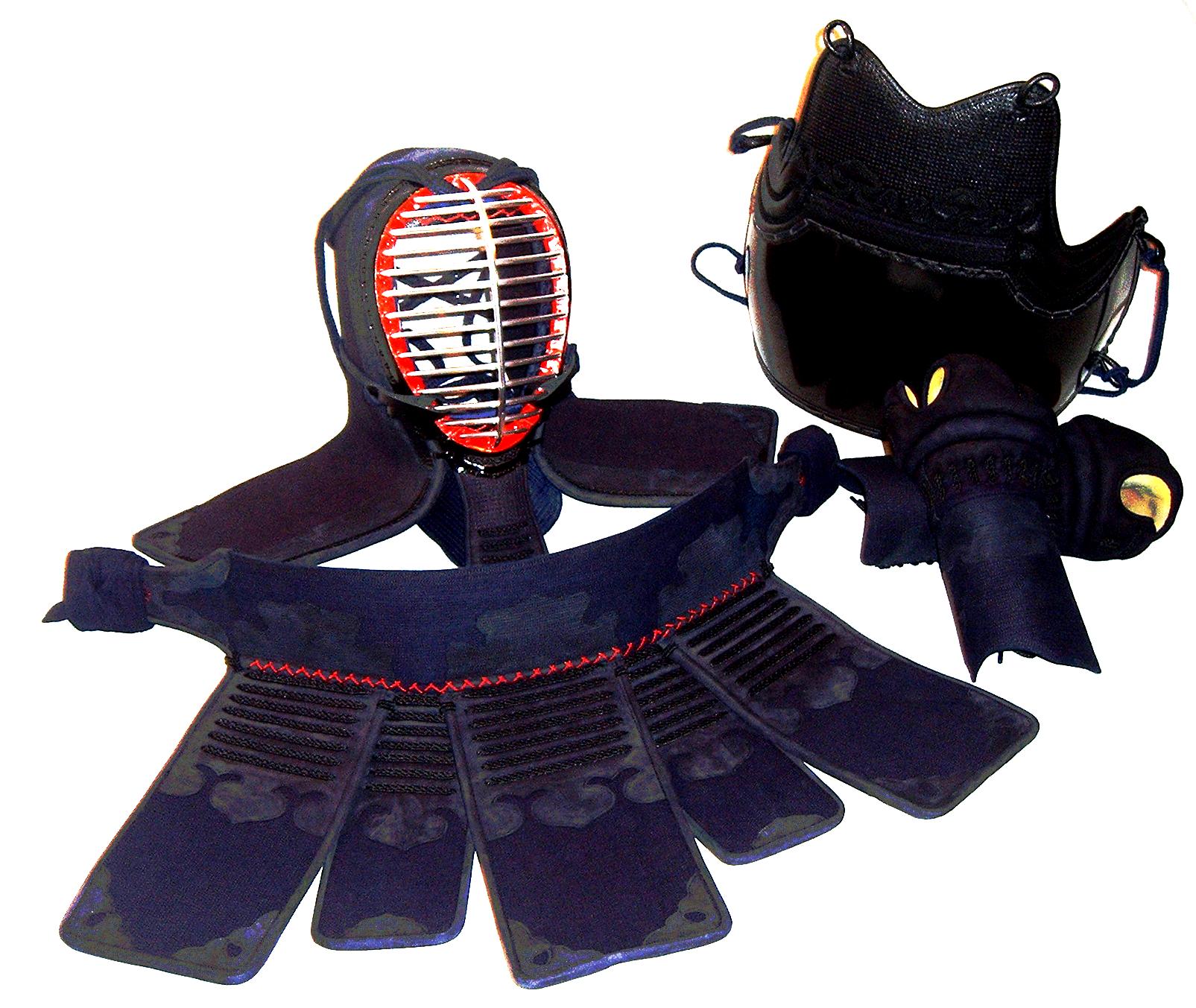
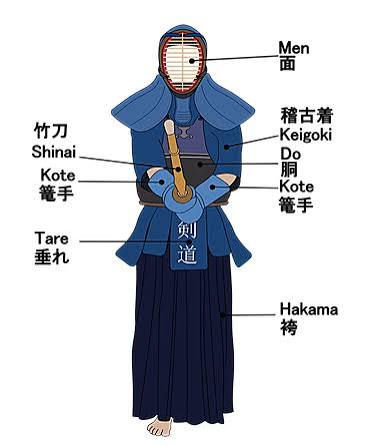
Bogu Components
Modern bogu comprises men (head), kote (hands), do (torso), and tare (waist), worn over keikogi and hakama, with a shinai for practice. The labelled diagram shows how each piece fits together on the body.
- Men (面) — head and face guard with metal grille
- Keikogi (稽古着) — quilted indigo training jacket
- Do (胴) — chest and torso protector
- Shinai (竹刀) — four bamboo slats bound for keiko
- Kote (篭手) — padded gauntlets for both hands
- Tare (垂れ) — waist protector with three panels (zekken shows dojo name)
- Hakama (袴) — the pleated garment worn for keiko
Men and Kote: Dressing Detail
The tenugui is folded and tied before the men goes on; kote are worn left then right from seiza. Check that men ties are secure and the tsuki-dare covers the throat completely. These details matter for safety and for presenting yourself correctly before keiko.
Men (Head Guard)
The men protects the head, face, and throat with a grilled men-gane (face mask) and padded cushioning. A properly fitted men sits level on the head without wobbling, and the throat protector (tsuki-dare) must cover the neck completely. Men strikes are judged by sound and compression of the padding.
Kote (Gauntlets)
Kote protect the wrists and forearms—the kote target zone. They consist of layered padding and a leather palm for gripping the shinai. Kote that are too tight restrict wrist snap; too loose and they shift on impact. Regular airing prevents bacterial growth inside the gloves.
- Put kote on by pushing the glove from the hand — never pull by the forearm section
- Pulling deforms the kote and strains the wrist joint
- Remove by pushing from the elbow — do not yank past the joint
- Dry palm leather stretched flat after keiko; air in a ventilated place or use newspaper inside
- Washable synthetic kote are now available — dry promptly after every session
Do (Chest Guard)
The do protects the torso with a curved lacquered or synthetic shell over padding. Do strikes must land on the right side with correct hasuji. A well-maintained do fits snugly at the waist without restricting breathing or hip rotation during fumikomi.
Tare and Bogu Care
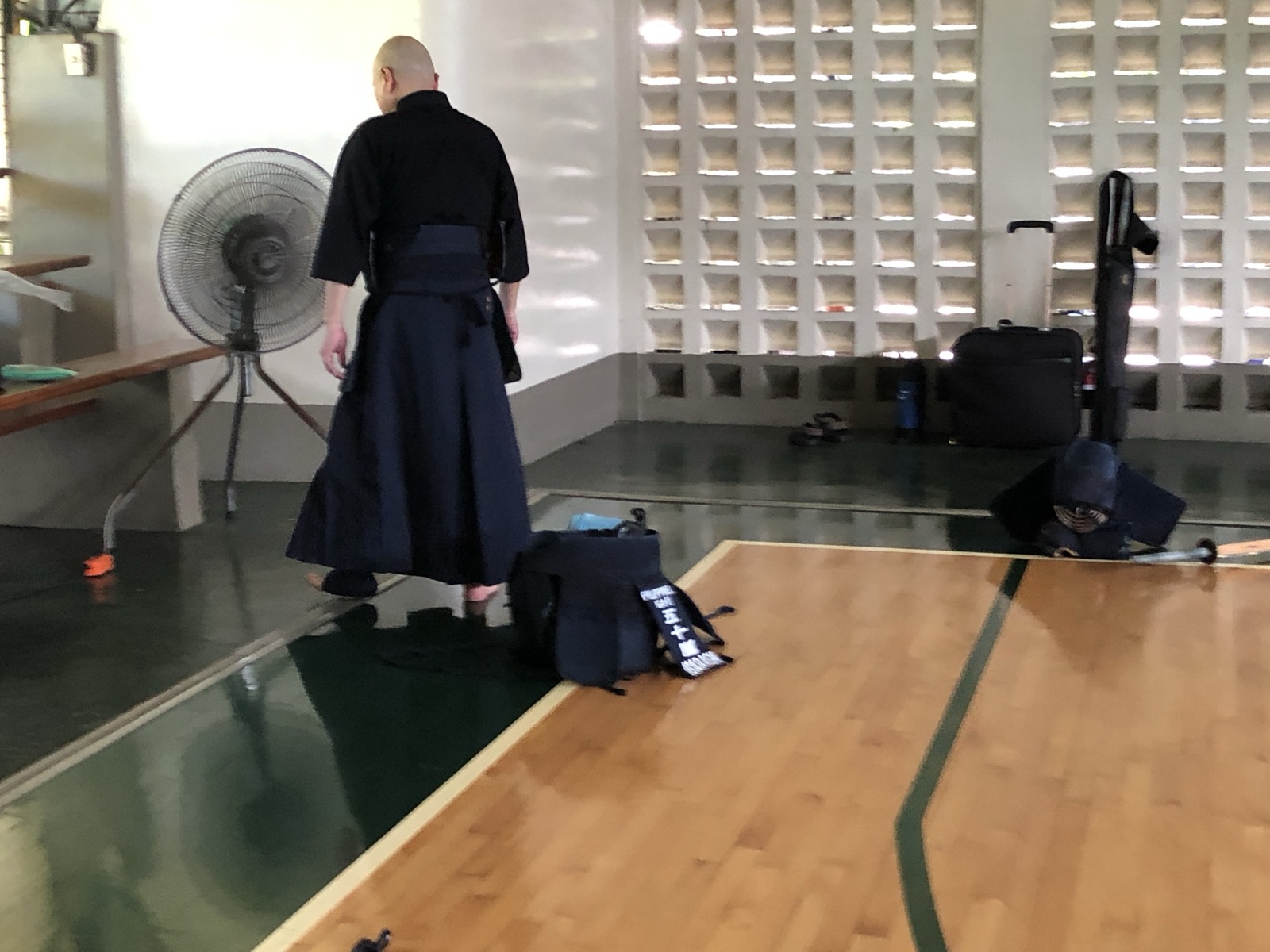
The tare (waist protector) consists of three overlapping panels shielding the hips and lower abdomen. After each keiko, wipe sweat from bogu, air-dry components, and pack each piece in the correct order for storage or transport. Periodic professional repair extends the life of quality bogu by many years.
- Wipe sweat from each bogu piece after keiko
- Air-dry men, kote, and do before packing
- Fold and store tare, do, kote, and men in the correct order
- Practice is not finished until equipment is stored with care
- — Bag packing order —
- Bogu bags are for transport, not long-term storage — use newspaper and desiccant if gear must stay packed
- Pack in order: folded hakama on bottom → tare wrapped around do → men → kote → folded kendogi on top
- Unpack: kendogi and kote first; place kote right of right knee, men on top; spread tenugui on men
- Remove do with tare (name facing front) and hakama last
- Do back loop: hang men by cords for drying — do not loop cords through kote hand (damages kote)
Further reading
Frequently asked questions
- When should I buy bogu in Hong Kong?
- After several months of consistent keiko and when your sensei advises — rent first if possible.
- Student vs premium bogu for beginners?
- Student sets suit most Hong Kong beginners; upgrade when commitment and sizing are confirmed.