
Basic Movements (Kihon)
Kihon—fundamental practice—forms the bedrock upon which every advanced technique rests. Without disciplined repetition of basic strikes, footwork, and posture, waza becomes unreliable under pressure. Daily suburi and kihon keiko are the mark of serious practitioners at every rank.
Suburi Practice
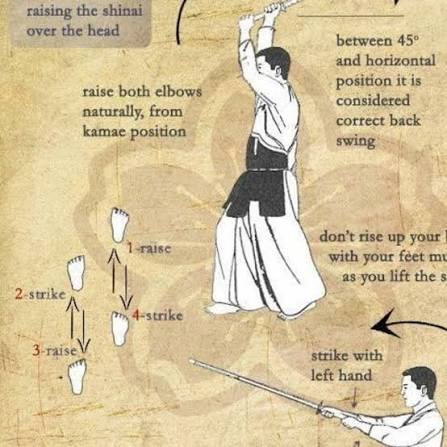
Suburi are cutting exercises performed without an opponent. Joge-buri swings vertically; naname-buri cuts on a forty-five-degree path. Push the shinai up with the left hand—the right hand only guides. Both hands move along a vertical line through the centre of the body. Glide the feet with okuri-ashi on each downward cut.
- Joge-buri — vertical swings; push up with the left hand, right hand guides
- Naname-buri — diagonal cuts at roughly 45 degrees
- Hayasuburi — fast swings to raise heart rate before keiko
- Both hands travel on a vertical line through the body centre
- Glide the feet with okuri-ashi on each downward cut
Men, Kote, and Do Strikes
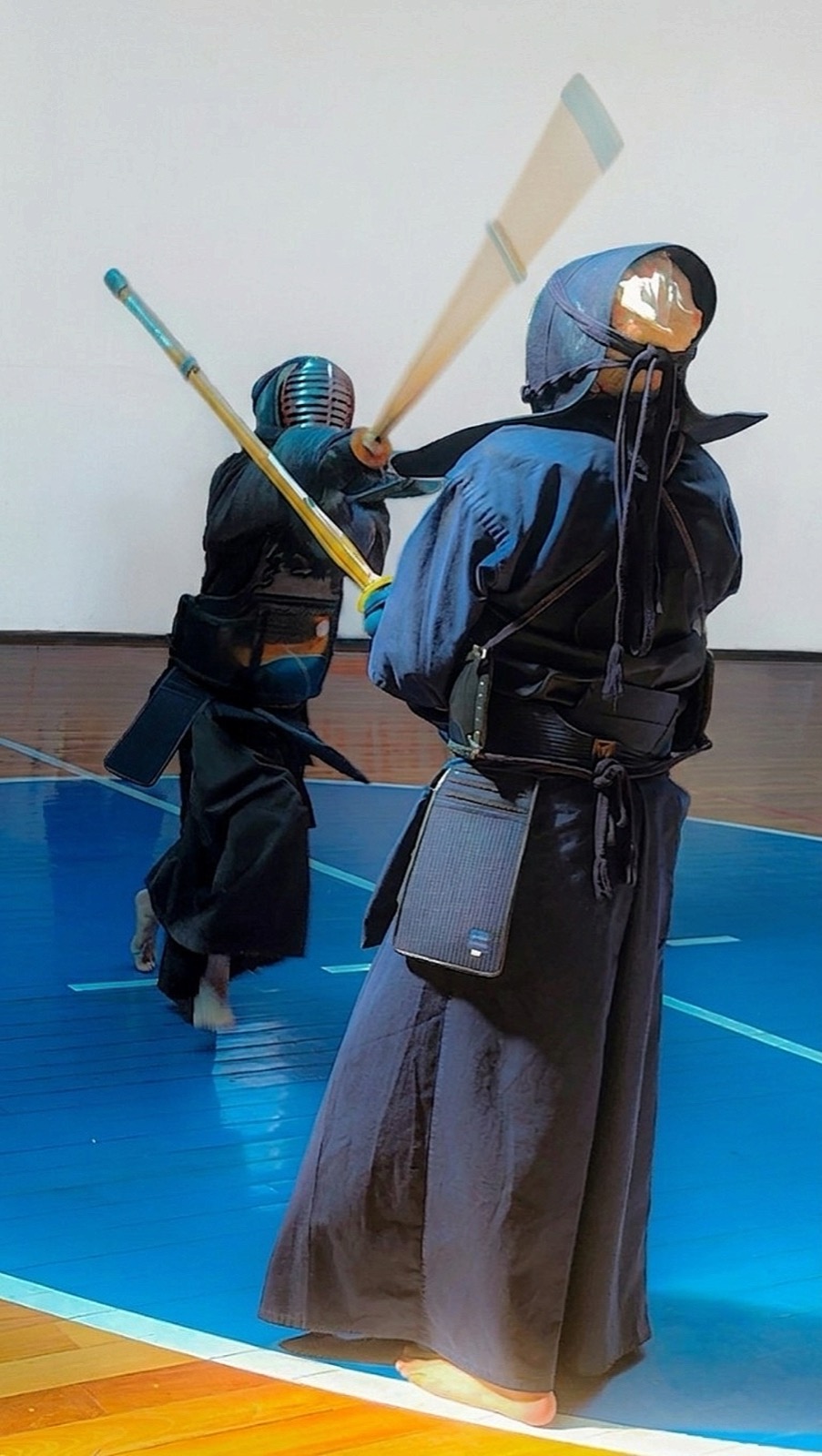
The four valid strike zones in kendo—men (head), kote (wrist), do (torso), and tsuki (throat)—each demand distinct angle, distance, and follow-through. Kihon drills isolate each strike from chudan-no-kamae, emphasizing ki-ken-tai-ichi and correct hasuji (blade angle).
- Men — crown of the head (centre) or either temple
- Kote — right wrist at waist level, or either wrist above chest height
- Do — either side of the torso
- Tsuki — thrust to the throat with the shinai tip
- Match won by two ippon, or one ippon if only a single point is scored in time
Kirikaeshi
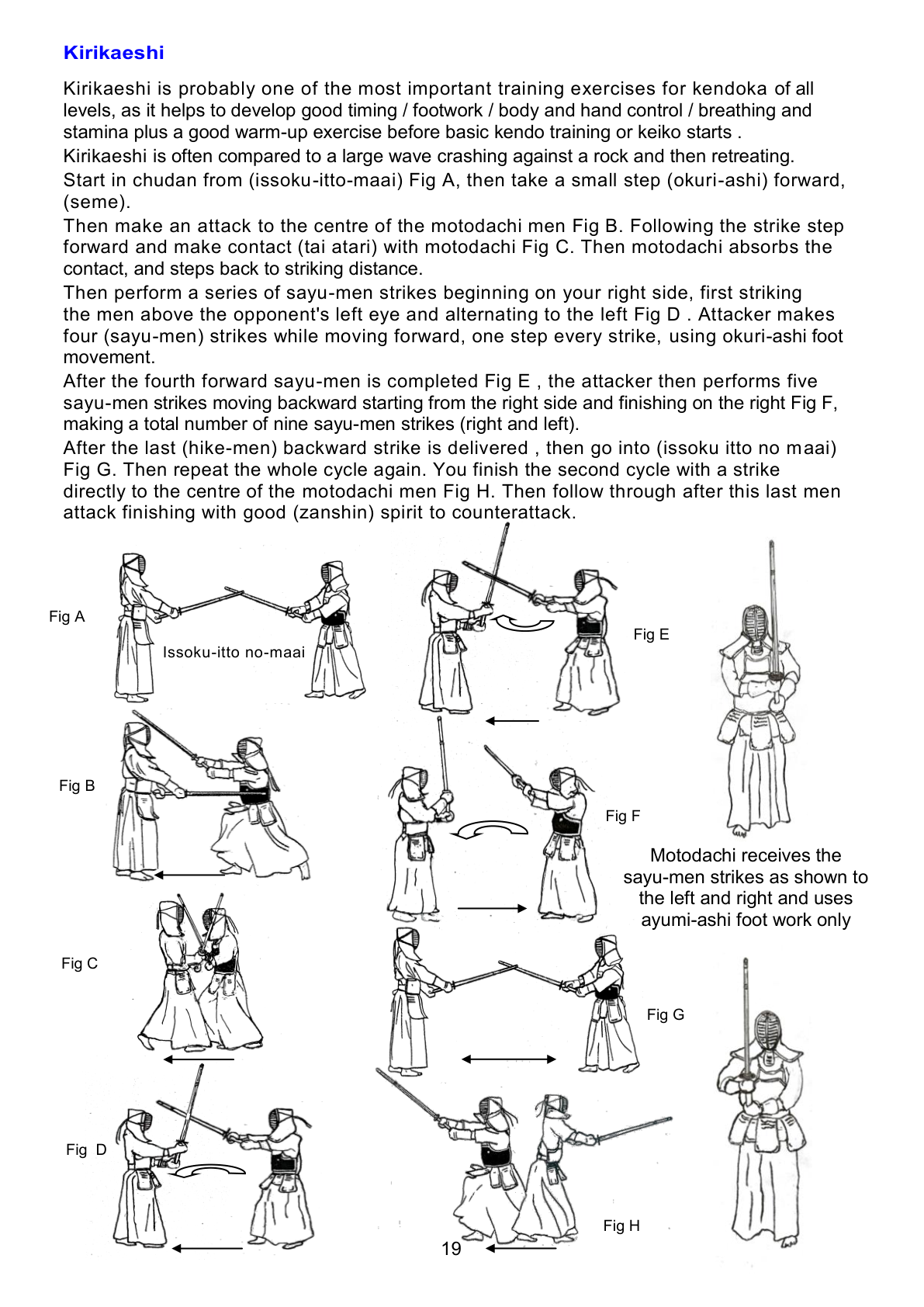
Kirikaeshi is the core kihon drill pairing a kakarite (attacker) with a motodachi (receiver). The standard sequence opens with a large men strike and tai-atari, then alternates yoko-men (sayu-men) while advancing four cuts and retreating five. Repeat the full set, finish with kihon shomen passing through the motodachi, and hold zanshin—like a wave crashing and retreating. In some dojos the opening men starts from a longer distance than issoku-itto-no-maai.
- Roles: kakarite (attacker) strikes; motodachi (receiver) holds the target
- 1. Men — from issoku-itto-no-maai, large forward lunge; kihon men to centre of the head
- 2. Tai-atari — press forward into body contact with the motodachi
- 3. Yoko-men forward — four sayu-men while advancing: right, left, right, left
- 4. Yoko-men backward — five sayu-men while retreating: right, left, right, left, right
- 5. Repeat the set: men → tai-atari → yoko-men forward → yoko-men backward
- 6. Final kihon shomen — centre men strike, pass through the motodachi
- 7. Zanshin — turn to face the motodachi and hold ready awareness
- Maintain loud kiai and crisp fumikomi on every cut throughout
Maai in Kihon
Distance in kihon begins at issoku-itto-no-maai—one fumikomi step to valid striking range. Toma is beyond mutual reach; chika-maai is inside one step where both can strike. Finding your personal issoku distance is essential before adding speed or bogu.
- Issoku-itto-no-maai — one step forward to strike, one step back to evade
- Toma — beyond issoku-itto; neither can reach the other (stay alert)
- Chika-maai — closer than issoku-itto; both can strike easily
Kihon Keiko Structure
A typical kihon session progresses from suburi to basic strikes with a motodachi (receiver), then to applied combinations. The motodachi provides correct openings and feedback; the kakarite (attacker) focuses on clean technique. This partnership embodies the cooperative nature of kendo training.
Ten suburi shapes
Grip with the left little finger on the tsuka-gashira and the right hand about a fist below the tsuba; the left hand does most of the work. Raise along the centre line, cut with the hips, and breathe out with the kiai. The groups below are a shape only. Your sensei sets the pace. Ten correct cuts beat a hundred sloppy ones. Kaeshi-suburi (かえしすぶり) is the alternating left-and-right arc, not a nonstop straight repetition.
- Beginner: basic suburi, 10 cuts × 3; slow swings, 3 seconds up and 3 down, 5 × 2; five minutes in a mirror
- Intermediate: step forward and back, 10 + 10; kaeshi-suburi (かえしすぶり), alternating arcs, 20 × 2; fumikomi suburi, 10 × 2
- Advanced: sayu-men, 10 each side; small kote swings, 20 × 2; a few cuts with a heavier shinai, 5–10; hyaku-hon suburi, 100
- Arms-only cuts tire you: let the hips drop the shinai. A cut off the centre line misses. Raised shoulders slow the swing. A bent wrist spoils hasuji. Keep the soles down.
Watch & learn
Further reading
Frequently asked questions
- What is hasuji?
- The correct cutting plane of the shinai — edge alignment through tenouchi and follow-through.
- Which points in kihon do sensei often mention?
- Shoulders that rise, elbows that bend, a step that has not yet come from the hips, and a kiai that arrives just after the strike. Each is a place a teacher can show, kindly.