
Bokuto (Wooden Sword)
The bokuto is a solid wooden sword used exclusively in kata and some kihon exercises. Unlike the shinai, it represents the weight and feel of a real sword more closely. Proper bokuto selection and handling are essential for safe kata practice and grading examinations.
Types of Bokuto
Standard kata bokuto follow AJKF specifications: approximately 101 cm length and 510 g weight for tachi, with a shorter kodachi for forms 8–10. Practice bokuto vary in weight and curvature. Red oak and white oak are common materials, each offering different durability and feel.
- Katana (shinken): forged steel, registered in Japan, used in iai, battō, and kendo kata
- Mogito: alloy imitation sword — looks real but cannot cut; fragile if struck against hard objects
- Bokuto: wooden sword for Nihon Kendo Kata — oak is most suitable for durability
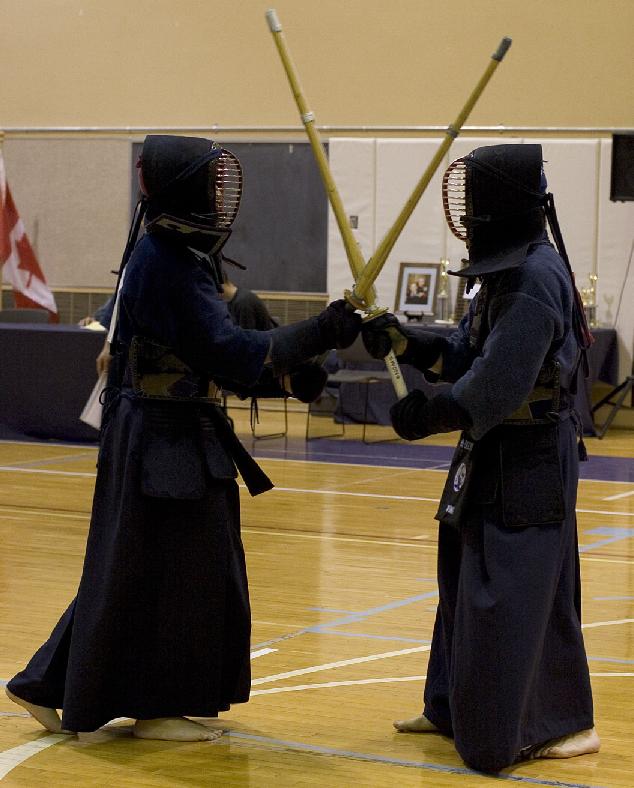
- Shinai: four bamboo slats — disperses impact for daily partner practice
- Kata bridges kata kendo and shinai kendo — both should interact technically
Bokuto Kihon Keiko-ho
Before full bogu practice, the nine AJKF bokuto kihon keiko-ho forms drill fundamental shikake and oji waza with the wooden sword. Each form pairs uchidachi and shidachi in a fixed sequence, building handling, distance, and timing without the protection of armour.
- 1. Ippon-uchi: men, kote, do, tsuki
- 2. Ni-san-dan: kote–men
- 3. Harai-waza: harai–men
- 4. Hiki-waza: hiki–do from tsubazeriai
- 5. Nuki-waza: men–nuki–do
- 6. Suriage-waza: kote–suriage–men
- 7. Debana-waza: debana–kote
- 8. Kaeshi-waza: men–kaeshi–do
- 9. Uchiotoshi-waza: do–uchiotoshi–men
- — Bokuto waza guidance —
- Purpose: introduce shikake and oji waza, teach zanshin, bridge to harder waza, link shinai to katana
- Motodachi and kakari-te are equal partners — no fixed uchidachi/shidachi roles unlike kata
- Formalities match kata except opening/closing za-rei — AJKF allows shortened formalities for repetition
- Bokuto waza are adaptable teaching aids, not static kata frozen over centuries
- All shikake strikes are big overhead cuts except tsuki — deeper cut than shinai kendo
- When motodachi opens a target, kensen stays within kakari-te shoulder width at shoulder height
- Do exception: motodachi raises fully into migi jodan to open the target
- Men ma-ai: monouchi cross at midpoint; kote: tips just cross; tsuki: between men and kote distance
Use in Kata
In kata, bokuto contact is controlled—strikes stop short or touch lightly. Uchidachi and shidachi must coordinate distance precisely. The wooden blade teaches hasuji and kime in ways shinai cannot, because the practitioner feels the sword's line directly.
Sizing and Selection
Choose a bokuto that balances with your grip and arm length. Too heavy a sword encourages muscular tension; too light and it fails to develop correct tenouchi. Consult your instructor before purchasing, as dojo may have specific requirements for examinations.
Care and Storage
Wipe bokuto after use to remove sweat and oils. Store horizontally or in a stand to prevent warping. Small cracks can be repaired with wood glue if caught early; deep splits require replacement. Never oil excessively, as this makes the surface slippery.
- Set clear goals before each keiko
- Prioritize correct form over speed
- Accept corrections with sincerity
- Maintain reiho throughout practice