
Concept & Purpose of Kendo
Kendo is not merely a competitive sport or martial art—it is a lifelong path of self-cultivation through the sword. The All Japan Kendo Federation established its foundational definition in 1975, articulating a purpose that transcends winning matches and reaches toward the refinement of human character.
The AJKF Definition (1975)
The All Japan Kendo Federation formally adopted this definition in 1975: "The concept of kendo is to discipline the human character through the application of the principles of the katana." This statement remains the authoritative expression of kendo's purpose in Japan and is cited by the International Kendo Federation worldwide.
- Original Japanese: 剣道は、剣の理法の適用により人格の陶冶をなすことを目的とする。
- Adopted by AJKF General Assembly, 1975
- Endorsed by FIK as the international standard
- — Purpose of practicing kendo —
- To mould the mind and body
- To cultivate a vigorous spirit through correct and rigid training
- To strive for improvement in the art of kendo
- To hold in esteem human courtesy and honour
- To associate with others with sincerity, and to forever pursue the cultivation of oneself—to love one's country and society
- To contribute to the development of culture and to promote peace and prosperity among all peoples
- Established by the All Japan Kendo Federation, 1975
- — Mumeishi Kendo Club spirit —
- Hira kareta kokoro — an open mind in learning
- Manabu kokoro — a spirit devoted to study
- Tomo wo omou kokoro — friendship with fellow kendoka
Principles of the Katana
The "principles of the katana" refer to the combative logic, posture, timing, and spirit that governed classical swordsmanship. Kendo preserves these principles through standardized technique, even though practitioners wield a bamboo sword rather than a live blade. Understanding this continuity helps students see kendo as a living tradition, not a disconnected sport.
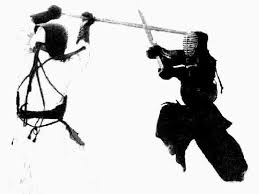
Discipline of Character
Character discipline in kendo manifests through rei (etiquette), perseverance in keiko, humility before seniors, and integrity in competition. The dojo is a space where ego is tested and refined; every bow, every strike, and every loss offers an opportunity to grow. This inner development is the true measure of a kendoka's progress.
- Rei-ho as the foundation of conduct
- Shugyo: austere, continuous training
- Seishin: unified spirit in action
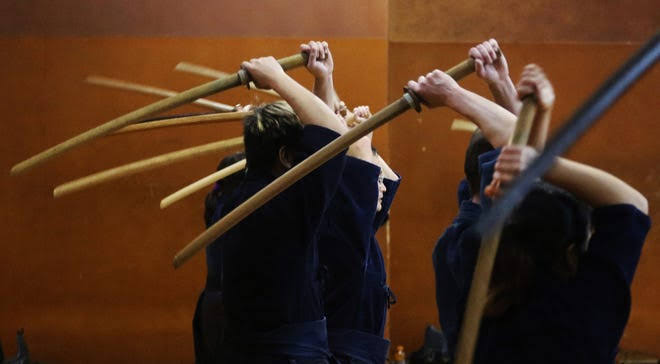
Purpose Beyond Competition
While tournaments motivate many practitioners, the AJKF definition places competition within the larger frame of personal development. Winning without proper spirit, posture, and zanshin is not true victory in kendo. Zanshin is the awareness that stays after the strike: the body still ready, the eyes still on the partner. A dan grade is a milestone on that path, not a finish. The goal is sincerity, courage, and consideration through decades of practice.
- Bow upon entering and leaving the dojo
- Never step over shinai or bogu
- Maintain silence during instruction
- Line up by rank before and after keiko
The dojo hour
For that keiko the phone stays in the bag. The work of the hour is the partner in front of you, the breath, and the next step. Rei at the door, rei to the sensei, and rei to the partner are how that attention is practised, not an extra ceremony after the technique. People leave with the same AJKF purpose they bowed under: character cultivated through the principles of the katana.