
Kendo Dan Levels & Grading System
Kendo dan levels progress from kyu (student ranks) through dan (master ranks). Each examination tests technique, spirit, knowledge, and character. Promotion is never automatic—examiners evaluate whether the practitioner embodies the principles appropriate to their level, with expectations rising dramatically at higher dan.
Kyu Ranks
Beginners typically start at 6th kyu or unranked and progress through kyu grades as they master fundamentals. A kyu examination usually includes kihon, a short kata, and jigeiko, sometimes with a written paper. Prepare over months, not the week before: daily suburi, the kata for that grade, and keiko that your sensei has already watched. Sensei may mention a kiai that arrives a little late, a bow still finding its shape, and kata remembered before maai is felt. Each federation sets its own kyu curriculum. In Hong Kong, the kata numbers follow that year’s HKKA notice.
- Set clear goals before each keiko
- Prioritize correct form over speed
- Accept corrections with sincerity
- Maintain reiho throughout practice
Dan Ranks (1st–5th)
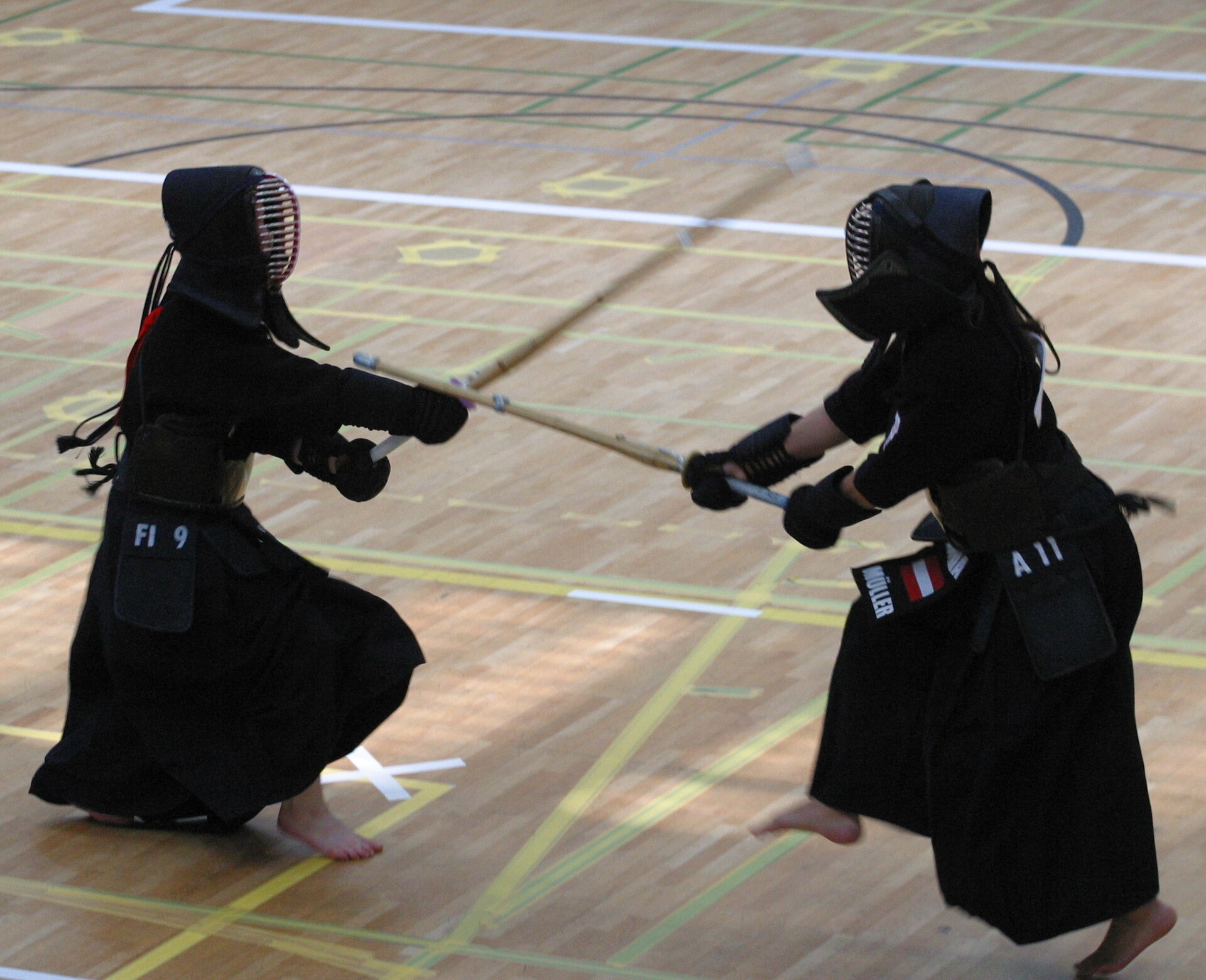
Shodan (1st dan) marks the transition from student to qualified practitioner. Through 5th dan, examinations intensify in ji-geiko, kata precision, and tactical understanding. The shape is still kihon, kata, jigeiko, and often a written paper. A typical stretch is regular keiko for months, with kata practised until the bows are as steady as the cuts. Candidates must demonstrate consistent ki-ken-tai-ichi and the maturity to train independently and assist juniors. Sensei may mention a first cut that is a little hurried, and zanshin that has not yet stayed after ippon. In Hong Kong, the kata numbers follow that year’s HKKA notice.
High Dan (6th–8th)
6th dan and above are awarded through rigorous examinations or recommendation based on sustained contribution. Examiners expect mastery of seme, calm tactical reading, and exemplary reiho. 8th dan is the highest rank of the regular examination ladder. 9th and 10th dan are exceptional grants, not grades you enter by sitting the usual exam. In Hong Kong, the kata numbers follow that year’s HKKA notice.
Hanshi and Kyoshi Titles
Beyond dan, the titles kyoshi (teaching master) and hanshi (model master) recognize exceptional contribution to kendo instruction and philosophy. These are awarded by federation recommendation, not examination. Hanshi 8th dan holders bear the greatest responsibility for preserving and transmitting kendo's essence.
Preparing for an examination
A grade recognises a stretch of work. It is not the end of training, and it is not won by rushing the calendar. In kihon, keep kamae steady, the rhythm even, and the kiai present. For kata, practise both uchidachi and shidachi with a regular partner, including the bows and the distance. In keiko, judges watch the quality of each cut and the zanshin after it, not a count of hits. For the written part, the All Japan Kendo Federation booklet 剣道必携 is a general reference. The Hong Kong paper, and the kata numbers required that year, follow the notice from the Kendo Association of Hong Kong, China. A widely used pattern elsewhere is shodan forms 1–3, nidan 1–5, and sandan 1–7. That pattern is not itself the Hong Kong rule. The day before, check the shinai and a clean keikogi and hakama. Arrive with time to warm up, and take one item at a time.
- The day before: clean keikogi and hakama, check the shinai, pack a spare string
- That morning: eat, arrive with time to warm up, and take one item at a time
- In keiko, one clean cut with zanshin is the standard the judges can see